<img src="https://ad.doubleclick.net/ddm/activity/src=10024890;type=invmedia;cat=front0;dc_lat=;dc_rdid=;tag_for_child_directed_treatment=;tfua=;npa=;ord=1?" width="1" height="1" alt=""> Digital provenance tracking: how DAM makes or breaks the chain
Skip to content

Featured image description..

Digital Asset Management Content authenticity

Digital provenance tracking: how DAM makes or breaks the chain

Last updated on: 9. November 2026

Digital provenance tracking is the practice of recording, preserving and verifying the history of a digital asset: who created it, how it was edited, what applications was used, and whether AI was involved. With the C2PA standard, that history travels with the file as signed Content Credentials. The record only counts if it survives every system the file passes through, making the DAM a deciding factor for whether editors can prove the file's authenticity.

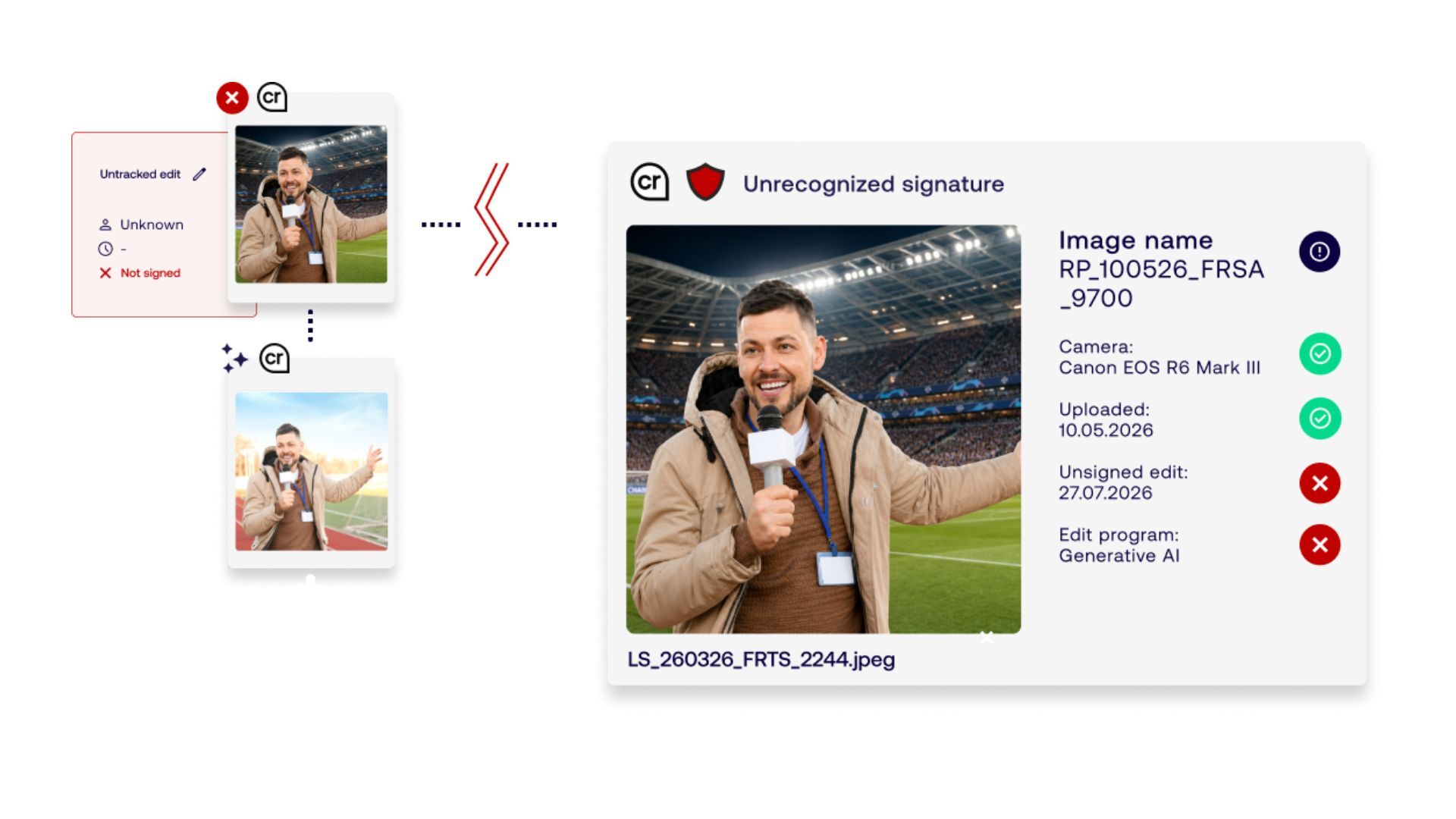
Content-credentials-in-fotoware-marking-ai-modified-content

What is digital provenance tracking?


Digital provenance tracking means keeping a verifiable record of an asset's origin and edits, from capture to publication. Captions, credit lines and metadata have described images for decades, but they can be changed without a trace. C2PA Content Credentials bind those statements to the file with cryptographic signatures, so that every change is documented and can easily be detected later.

For media- and content leaders, this changes how visual assets are treated. From being copied and remade in different applications, there's now a much greater value in limiting the number of applications that touches the file, and making sure that those who do so supports the C2PA standard. 

Read more: Content Authenticity in Fotoware

Why is content provenance a leadership issue now?


Provenance has moved from the picture desk to the leadership agenda because the burden of proof now sits with whoever publishes the image. According to the Reuters Institute Digital News Report 2026, 62 percent of people across 48 markets are concerned about telling what's real from what's fake online, and trust in news has fallen to 37 percent, the lowest level since tracking began in 2015.

Regulation points the same way. Since August 2, 2026, Article 50 of the EU AI Act has required providers to mark AI-generated content in a machine-readable way, and deployers to disclose deepfakes and unreviewed AI-generated text on matters of public interest. Most publishers and communication teams count as deployers. A provenance record is how you show what AI did, and didn't do, to a published asset.

The pressure isn't limited to newsrooms. Communication managers publish everything from press images to campaign visuals every week. When one of them is questioned, the speed and credibility of the answer depend on whether the file's history survived its publication workflow.

Read more: How to work faster with metadata-driven workflows

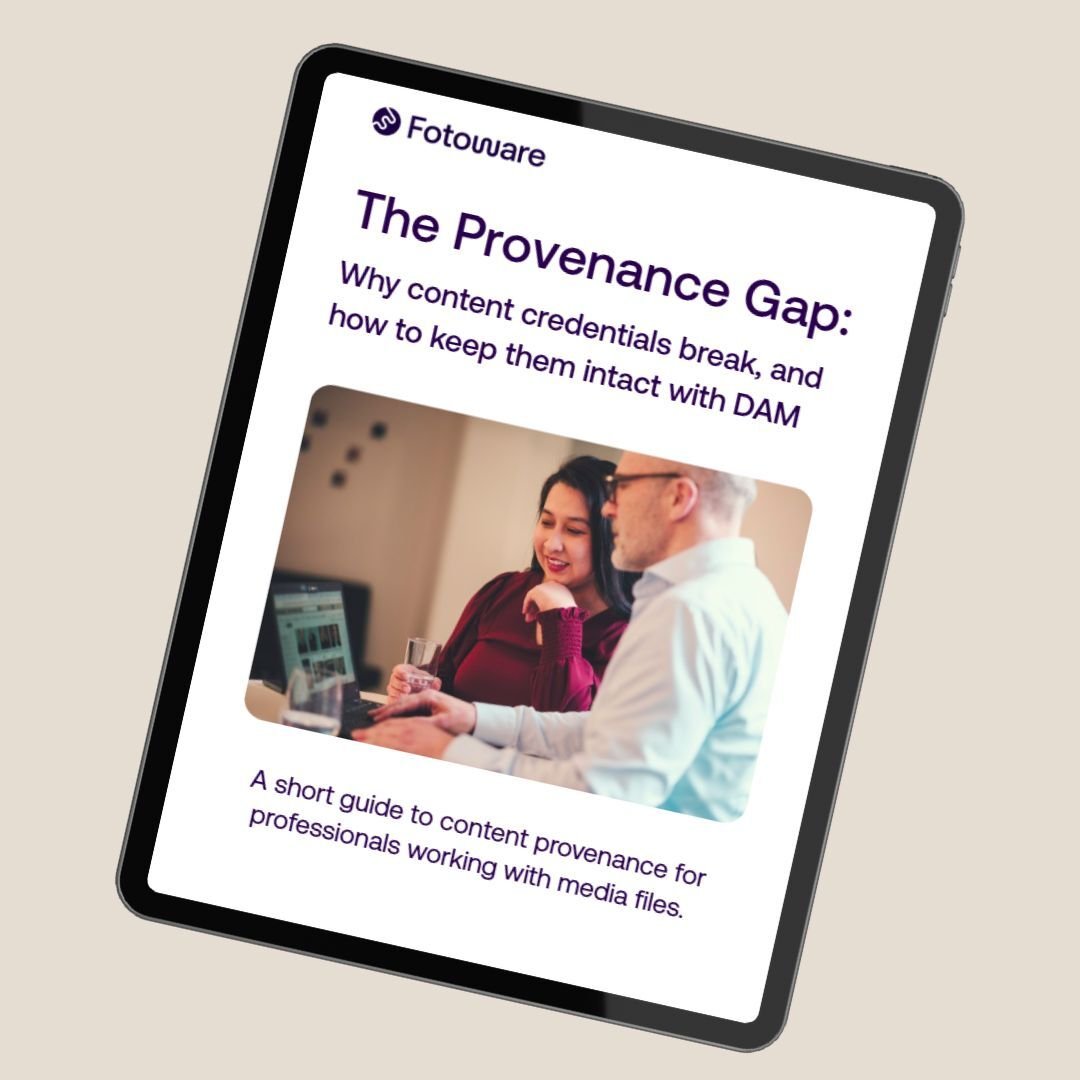
The-provenance-gap-guide-cta
Free guide:

The provenance gap

Why content credentials break, and how to keep them intact with DAM. 

Access the guide

What do you risk by waiting?


Waiting means building an archive of assets that can't prove their own history. A signature applied by a camera at the moment of capture can't be recreated later. So, unless one takes advantage of digital watermarking technologies, every file that loses its record stays unverifiable for good.

Long term, this means more internal uncertainties about stored files and fewer abilities to prove their authenticity. 


What should leaders require from their systems today?


The first step is to create a plan for how to include C2PA across the technical ecosystem. Once the plan is in place, the next step is to start treating content provenance as a policy, making sure it's prioritized across the entire workflow.  

These six steps give both news and communication leaders a practical starting point:

  1. Set a provenance policy. Decide which content must carry Content Credentials, for how long, and what should happen if they arrive without this.

  2. Map every transfer. List each system a file passes through between initial capture and publication, including editing tools, the DAM, cloud storage tools, CMS, syndication and social channels. Each hop is a place where the record can be dropped.

  3. Make the DAM the anchor. Require C2PA support on ingest, on edit, on round trips to third-party tools and on export, with an untouched original kept as a reference. Ask vendors to show a signed crop and a signed export in a live demo.

  4. Put provenance in front of the people who publish. Editors and communication staff need to see credential status where they search and select assets, and should be able to filter out files with invalid credentials or AI involvement before publication.

  5. Name an owner. Provenance crosses the picture desk, communications, legal and IT. Give one role responsibility for the policy and its exceptions.


How does Fotoware support digital provenance tracking in DAM?

Fotoware supports Content Credentials end to end, following the open C2PA standard, and has been a member of the Content Authenticity Initiative since 2023. The Content Authenticity capability preserves provenance data on ingestion and keeps it intact throughout the asset's lifecycle.

Read more: Fotoware launches Content Authenticity: complete C2PA support in the DAM

Every edit, crop and metadata adjustment made in the DAM is recorded in the file's traceable history, and edits made in third-party systems are signed and traced in the same way. Users can inspect credentials in detail without leaving the system, and use search filters to exclude files with invalid credentials, AI manipulation, or no camera origin.

At Visa pour l'Image 2026, Fotoware and Canon demonstrated how this works across a real photo workflow, from capture to consumption.

Every organization that publishes images will be asked to show where they came from. The ones able to answer will be those that decided early which systems may touch the file, and required each of them to keep a verifiable record.


Proving-whats-real-the-role-of-dam
Webinar:

Proving what's real

Discover how a DAM system can keep content credentials intact and verifiable throughout the image lifecycle.
Watch on-demand

On this page