Most organizations with a central library can find their files. Knowing whether a file may be used is a different matter, because that information often sits in a contract folder, a spreadsheet or someone's inbox. That gap between finding an asset and trusting it is what a DAM maturity model measures.
This article explains the five stages of Digital Asset Management maturity and where image banks and operational DAMs fit. It also shows why the system sets a ceiling on what good practice can achieve.
What is a DAM maturity model?
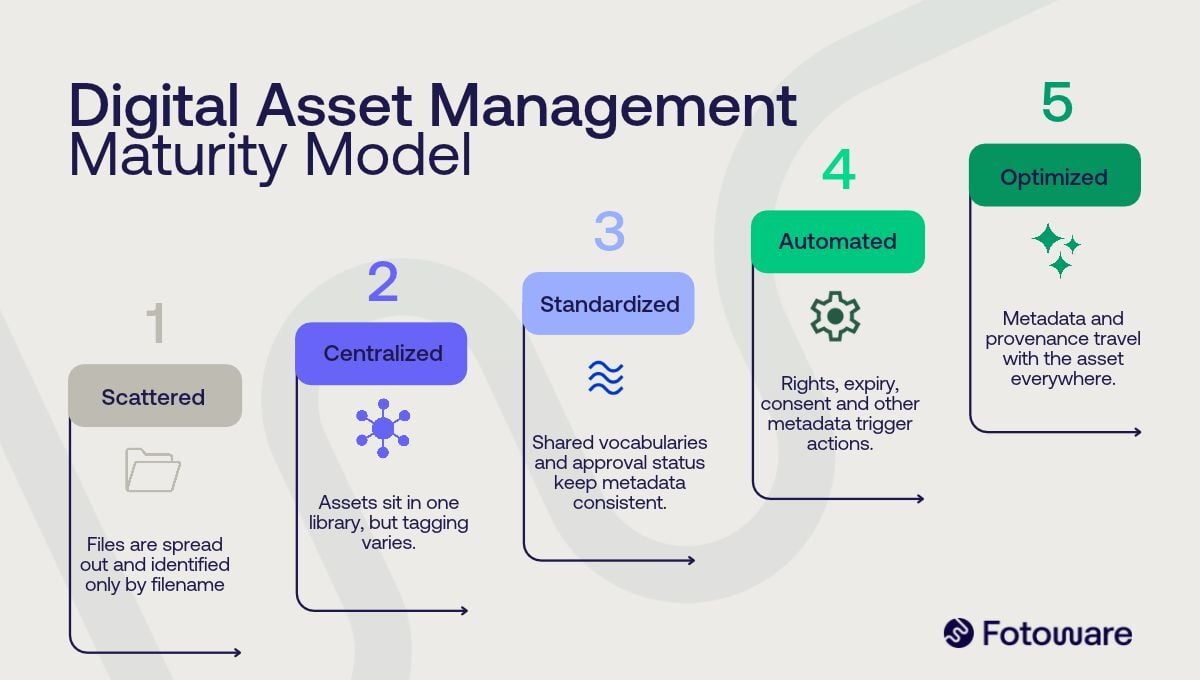
A DAM maturity model rates how systematically an organization handles its digital assets on a scale of five stages: 1. Scattered, 2. Centralized, 3. Standardized, 4. Automated and 5. Optimized. Each stage reflects how much of the work around an asset is built into rules and workflows, and how much is left to individual habit.
For an organization, the stage has practical consequences. At the first stages of DAM maturity, time goes into searching for files and checking rights by hand and mistakes with licenses or consent are hard to catch before they happen. Further up in maturity, those approaches to governance run automatically and assets can be reused without second-guessing. Knowing your stage helps decide where to invest next and whether the problem calls for a new DAM system because your current one has reached its limits, or a better use of the current one.
The DAM maturity model also gives a realistic indicator of AI readiness. AI tools for tagging and search work with the metadata and rules an organization already has, so the stage you are at predicts how much they can deliver. We look at this in more detail further down.
The five stages of DAM maturity
The most practical way to describe each stage is by what a single asset knows about itself.
1. Scattered: the asset has a filename
Files live in shared drives, email attachments, laptops and personal cloud folders. Whatever the asset "knows" is in its filename and "final_v3_approved" rarely tells the truth. Finding an image means asking a colleague. Assets are regularly recreated because nobody can locate the original.
Read more: Digital Asset Management vs Cloud Storage: what is the difference?
2. Centralized: the asset has some keywords
A central library exists. Some assets are tagged, but the tags depend on who uploaded them, so one person's "laptop" is another person's "computer". Search works for recent material and falls apart for anything older.
Read more: Image Bank vs DAM: What's the difference?
3. Standardized: the asset follows shared rules
The organization agrees on a controlled vocabulary and required fields, and approval status is recorded. Rights information exists, though often in a spreadsheet or contract folder beside the DAM, not in the asset itself.
4. Automated: the asset's metadata drives the work
Rights, expiry dates, consent and approval status are stored as metadata, and they trigger actions. An image whose license expires is flagged or withdrawn automatically. Approved files move to the right channels without manual handoffs. Integrations with systems such as a Content Management System (CMS) or Product Information Management system (PIM) keep the same information in sync.
5. Optimized: the asset carries its history wherever it goes
Metadata is embedded and travels with the file into every connected system. Provenance is preserved, so the organization can show whether an image is original or AI-generated. Usage is tracked and assets find new purposes beyond the one they were created for. Taxonomies have named owners who review them regularly.
The "ask one asset" test
A full maturity assessment looks at skills, ownership, workflows and integrations across the organization. This check covers only one part of it, the information stored with your assets. It takes a few minutes and gives a first indication of where a closer look is worth the effort. Pick one asset at random from your library, ideally an image that is at least two years old. Then try to answer these questions using only the information stored with it:
-
What does it show?
-
Who created it?
-
Are we allowed to use it?
-
Where may it be used and until when?
-
Who appears in it and have they given consent?
-
Is it original or has it been edited or generated?
-
Where has it been used before?
Count how many answers you found without asking anyone. One or two usually points to Scattered or Centralized. Three to five suggests Standardized or early Automated. An asset that answers all seven, including consent and provenance, suggests the information side of your practice is close to Optimized.
Run the test on five or six assets from different departments and the results will probably disagree with each other. A newsroom may find every image instantly but have no record of consent. A museum may hold detailed provenance in a collection management system the DAM is not connected to. That unevenness is normal, and it points to where a closer look will pay off.
Image bank, brand portal, or operational DAM: where each DAM type fits
Maturity depends on practice, but the system sets a limit. An image bank that is run with discipline will still never reach Automated stage because it has nowhere to store the information that drives workflows.
|
System type
|
What it does well
|
Typical stage
|
Limit
|
|
Shared drives and cloud folders
|
Storage
|
Ad hoc
|
Incipient: no metadata model
|
|
Image bank or media library
|
Central storage, search, download
|
Incipient to Formative
|
Formative: rights and consent live outside the file
|
|
Brand or marketing portal
|
Distributing approved brand assets
|
Formative to Operational
|
Can be operational but usually within one department
|
|
Operational DAM
|
Metadata-driven workflows, embedded rights, consent management, integrations
|
Operational to Optimal
|
Optimal: metadata and governance needs to be maintained and system has clear owners
|
The first three rows explain a common misunderstanding. A well-stocked image bank looks mature: everything is in one place and search returns results. The issues show the moment someone asks whether a picture can be used in a paid campaign in Germany next spring. The answer sits somewhere outside the system.
The last row needs an honest disclaimer. An operational DAM raises the ceiling, but it doesn't lift anyone off the floor. Without a maintained taxonomy and clear ownership, it becomes an expensive image bank. Buying a more capable system is the easier step. Changing how people describe, approve, reuse and retire assets takes longer, and that change delivers most of the value.