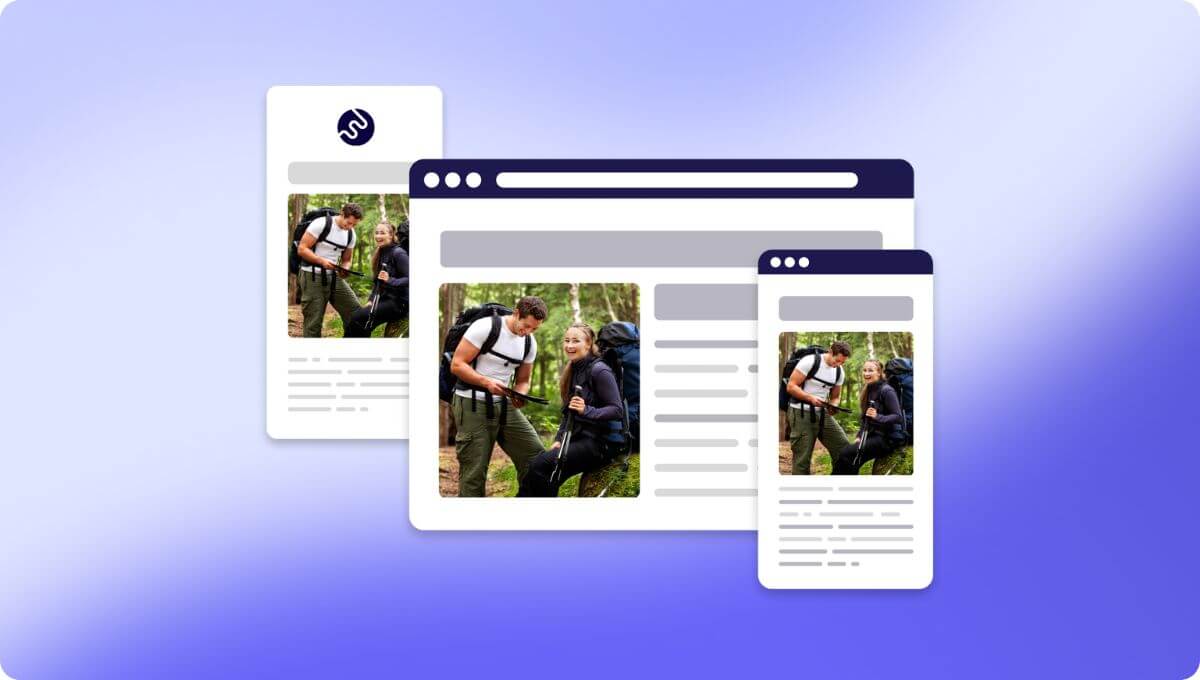
Managing content across websites, social media, advertising channels, and content portals is no small feat. As organizations grow, so does their library of digital files, and with it, the complexity of getting the right content to the right place, at the right time.
The challenges are familiar: outdated assets being published online, stakeholders reaching for unapproved materials, time-consuming manual processes, and a lack of control over image rights and licenses. These aren’t unique, one-time cases, but everyday friction points in omnichannel content operations.
Fortunately, there are several concrete, proven measures you can take to regain control and make your omnichannel publishing process more efficient and secure.
If you would like to go straight to the full best practice guide, you can download it here. Otherwise, read on for a summary of the 5 key measures.
Get the free guide on Omnichannel Publishing best practices. >
What is omnichannel publishing?
Omnichannel publishing is the practice of distributing consistent, on-brand content across multiple channels and platforms simultaneously, spanning websites and e-commerce portals, social media, reseller networks, and advertising channels. A successful omnichannel strategy ensures that every stakeholder, in every system, always has access to the correct, approved, and up-to-date content.
Why omnichannel content distribution is challenging
The more platforms and stakeholders involved, the harder it becomes to maintain consistency and control. Common pain points include:
- Multiple versions of the same file circulating across teams
- No clear ownership of what content is approved and current
- Manual, ad-hoc processes for publishing and updating assets
- Lack of visibility into where and how assets are being used
- Compliance risks from expired licenses or missing consent
These issues don’t just create internal headaches, but also affect how your brand is perceived externally.
5 measures for streamlined omnichannel publishing
1. Establish a single source of truth
When content is scattered across shared drives, email threads, and local folders, errors are inevitable. Centralizing all assets and data in one system, such as a Digital Asset Management (DAM) solution, eliminates duplicates, reduces the risk of outdated files being used, and gives everyone in your organization a reliable, consistent reference point. Every image, graphic, or document is stored, tracked, and easy to find, with its metadata always intact.
2. Conduct regular audits of content and channels
Staying in control of your content means regularly reviewing both what you have and where it lives. Audits help you catch outdated, unapproved or duplicate files before they reach your audience, and ensure your active channels remain aligned with your current strategy. With a DAM as your central repository, these audits become faster and more dependable. You can automate clean-up tasks, track adjustments, and get a clear overview of how your assets are being used across every touchpoint.
3. Create reusable content items and modules
Building a structured library of approved graphics, copy blocks, templates, and campaign elements means your teams spend less time hunting for assets and more time creating and publishing. Each module should carry clear metadata and usage guidelines, so stakeholders always know exactly what they are working with, and brand consistency is maintained across every channel.
4. Implement data governance and access control
Not everyone needs access to everything. Establishing clear data governance protocols ensures that publishing rights, access permissions, and approval statuses are based on objective criteria, not guesswork. Granular access control embedded in your workflows means only the right people can interact with specific assets at the right time, reducing the risk of human error, lost files, and compliance issues. This is the foundation of data-driven automation.
5. Connect key systems for enhanced speed and control
Omnichannel publishing works best when your platforms talk to each other. By integrating your DAM with your CMS, e-commerce platform, and other key systems through open APIs, you eliminate the need for manual file transfers and ad-hoc uploads. Content flows automatically to where it’s needed, always current and always accurate. Far more than a repository, the DAM acts as the orchestrator of your entire content distribution operation, sitting at the center of a connected ecosystem.
Read more: DAM integrations: Build your content ecosystem
The result: an interconnected, scalable content ecosystem
These five measures are not independent steps. Rather, they work together to ensure a unified system. Each one reinforces the others, creating a content infrastructure that is consistent, reliable, and built for rapid distribution at scale.
When your content operations are truly connected, your teams gain the confidence to publish quickly, knowing the right version is always available and approved. That’s what a mature omnichannel strategy looks like in practice.
Download the full guide, 5 measures for streamlined omnichannel publishing, for a more detailed overview and practical tips.