Digital Evidence Management: DEM system features and benefits

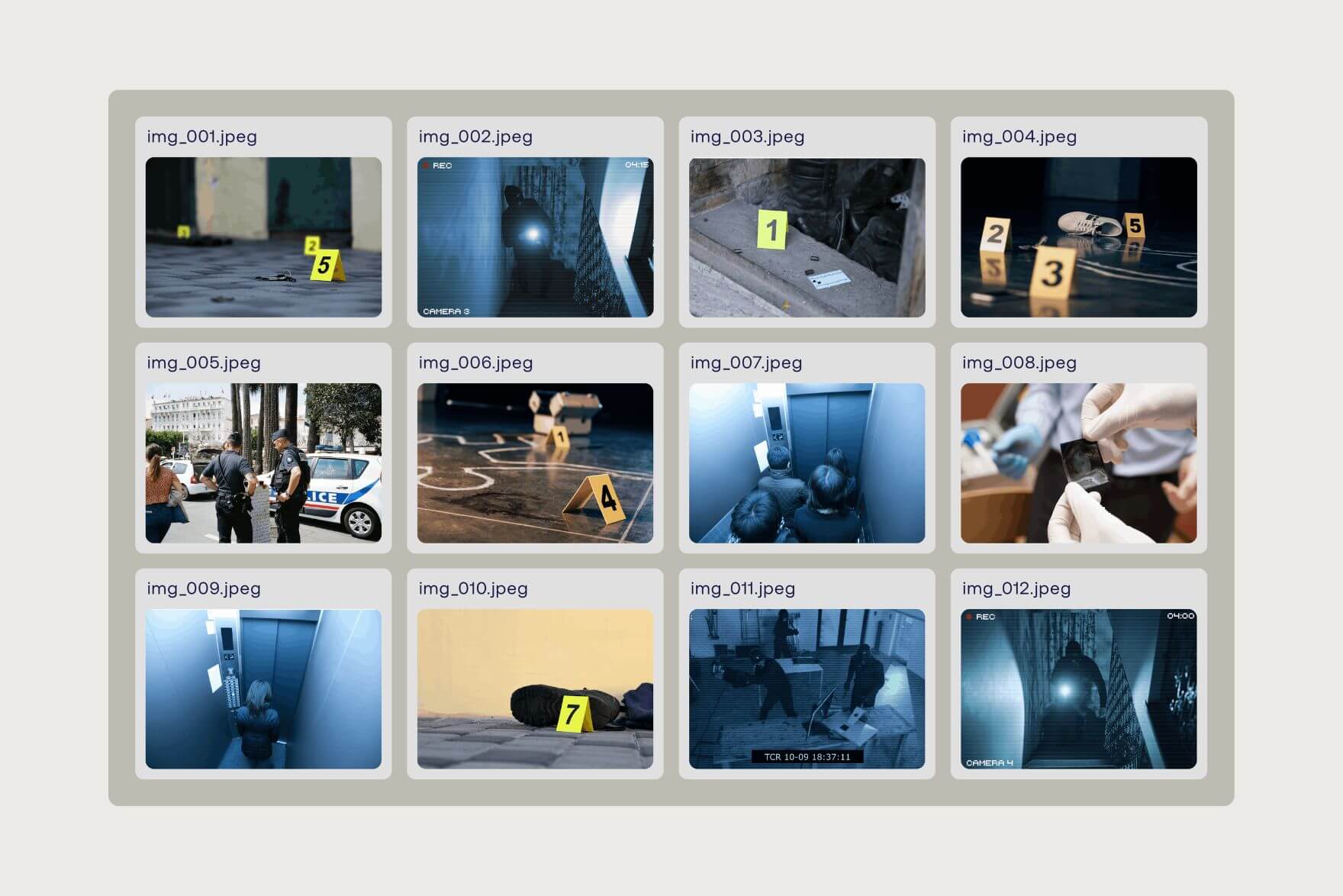
Digital evidence is central to modern justice. Body cameras, CCTV, mobile phones, drones, social media, and connected devices generate massive amounts of data that can confirm facts, protect rights, and establish accountability. But without structured Digital Evidence Management, this data becomes fragmented, risky, and slow to use.
This page explains what Digital Evidence Management is, why it is important, what a DEM system does, the most important features of a DEM system, what challenges they solve, how to choose a DEM solution, and how the market is evolving.
What is Digital Evidence Management (DEM)?
Digital Evidence Management (DEM) is the structured, end-to-end practice of collecting, preserving, organizing, analyzing, sharing, and presenting digital evidence while maintaining integrity, security, and an unbroken chain of custody from the moment of capture through courtroom use and long-term retention.
In practical terms, DEM is less about technology alone and more about how modern justice systems handle digital truth. Traditional evidence processes were built around physical items like paper files, DVDs, photos, which are stored in storage rooms.
DEM replaces this storage room with a centralized evidence hub for coordinated digital workflows that treat multimedia evidence as mission-critical information rather than a byproduct of policing or investigations.
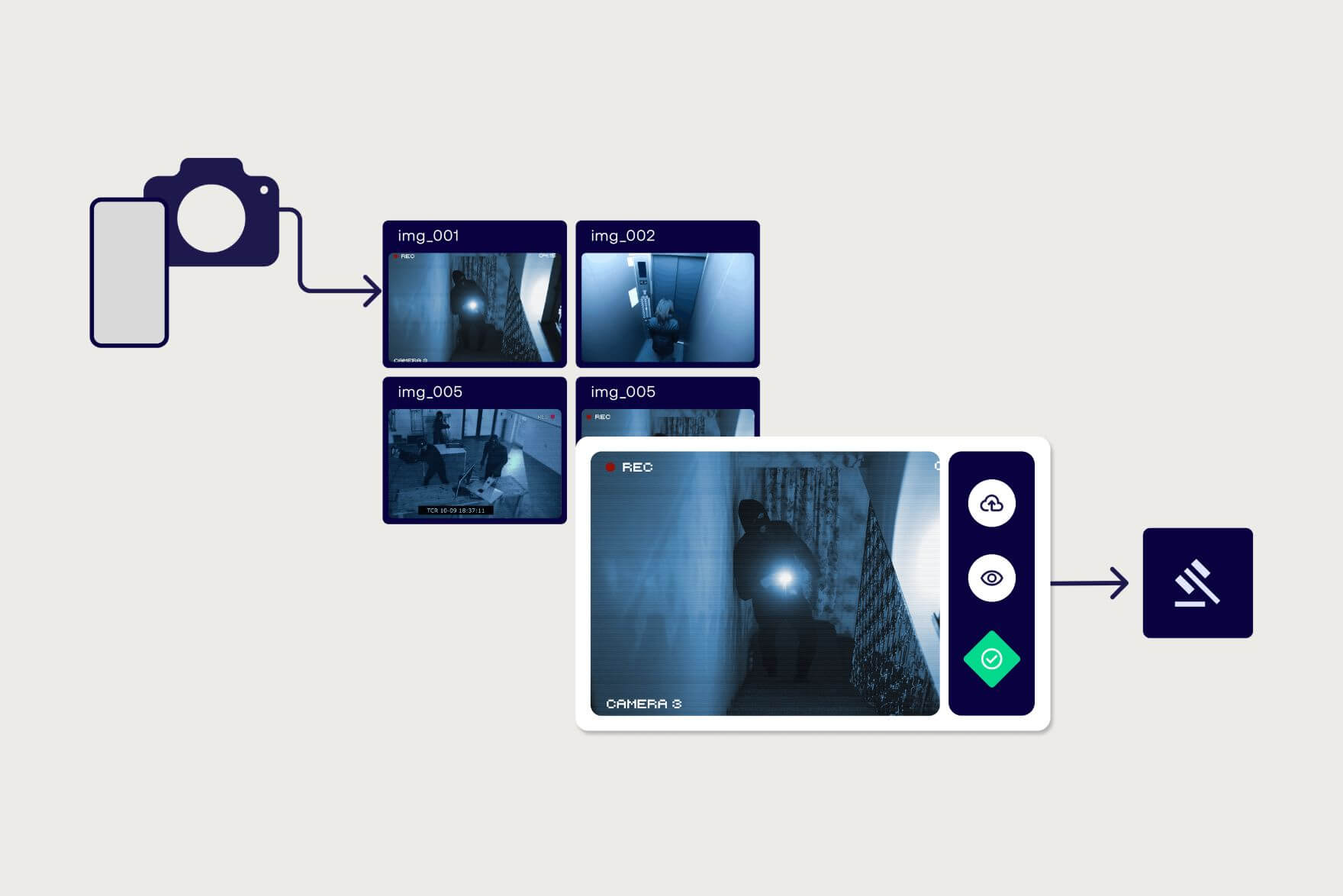
DEM brings order to complexity. Instead of evidence living in multiple tools, inboxes, hard drives, or other storage solutions, DEM establishes common rules for how digital material enters an agency, how it is described, who can access it, how it is verified, and how it moves between investigators, prosecutors, defenders, and courts. This makes evidence not only safer, but also more usable.
DEM also integrates technical, legal, and operational requirements:
- Technically, it must protect original files and metadata.
- Legally, it must produce clear audit trails that can withstand scrutiny.
- Operationally, it must fit real investigative workflows so that officers, analysts, and attorneys actually adopt it rather than work around it.
Is DEM the same as digital forensics?
Importantly to mention is that DEM is not the same as digital forensics. Forensics focuses on extracting data from devices, while DEM governs what happens after evidence is collected: how it is managed, interpreted, shared, and presented across the justice ecosystem.
However, a DEMS is often used and/or referred to as Forensic Images Management System.

Why is DEM important?
Digital Evidence Management is essential because digital evidence now appears in the vast majority of criminal cases, is growing at unprecedented speed, and directly shapes the reliability, fairness, transparency, and efficiency of modern justice systems.
Scalability
The central reason that DEM matters is scale. Law enforcement agencies, courts, and legal teams are no longer dealing with a few videos or files per case, but with entire ecosystems of data sourced from body cameras, CCTV, mobile phones, drones, social media, forensic imagery, and other digital devices. Without modern management, this abundance of evidence becomes a liability rather than an asset.
Speed
A second driver is speed. Fragmented evidence systems slow investigations, delay disclosures, and contribute to court backlogs. When evidence is centralized and searchable, investigators spend less time locating files and more time analyzing facts. This shortens case timelines and reduces administrative burden across the justice chain.
Chain of custody
Third, DEM strengthens credibility. Clear chain of custody, tamper-proof records, and standardized handling reduce disputes over authenticity. This benefits both prosecution and defense by making evidence more transparent and defensible.
Read more: The crisis of trust in digital content - GenAI and Content Authenticity
Accountability
Finally, DEM supports public accountability. As Freedom of Information requests and public scrutiny increase, agencies need consistent, auditable, and efficient ways to review, redact, and release digital material. DEM turns what was once a chaotic process into a repeatable, governed workflow.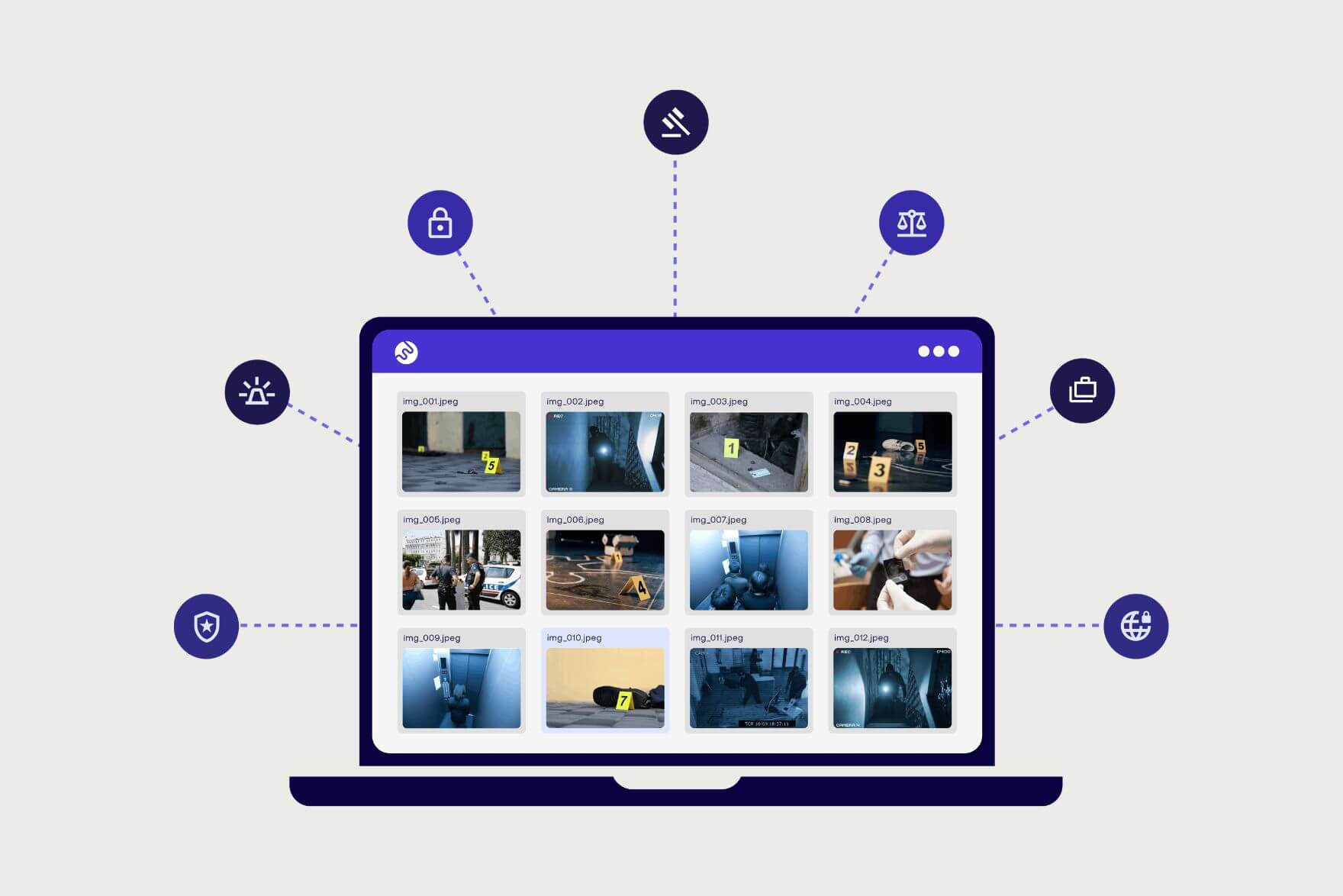
What does a Digital Evidence Management System (DEMS) do?
A DEM system centralizes all digital evidence into a secure repository, automates ingestion from multiple sources, preserves originals and metadata, tracks chain of custody, enables intelligent search and review, supports case organization, and allows controlled sharing and courtroom presentation within one connected workflow.
DEMS as a central platform
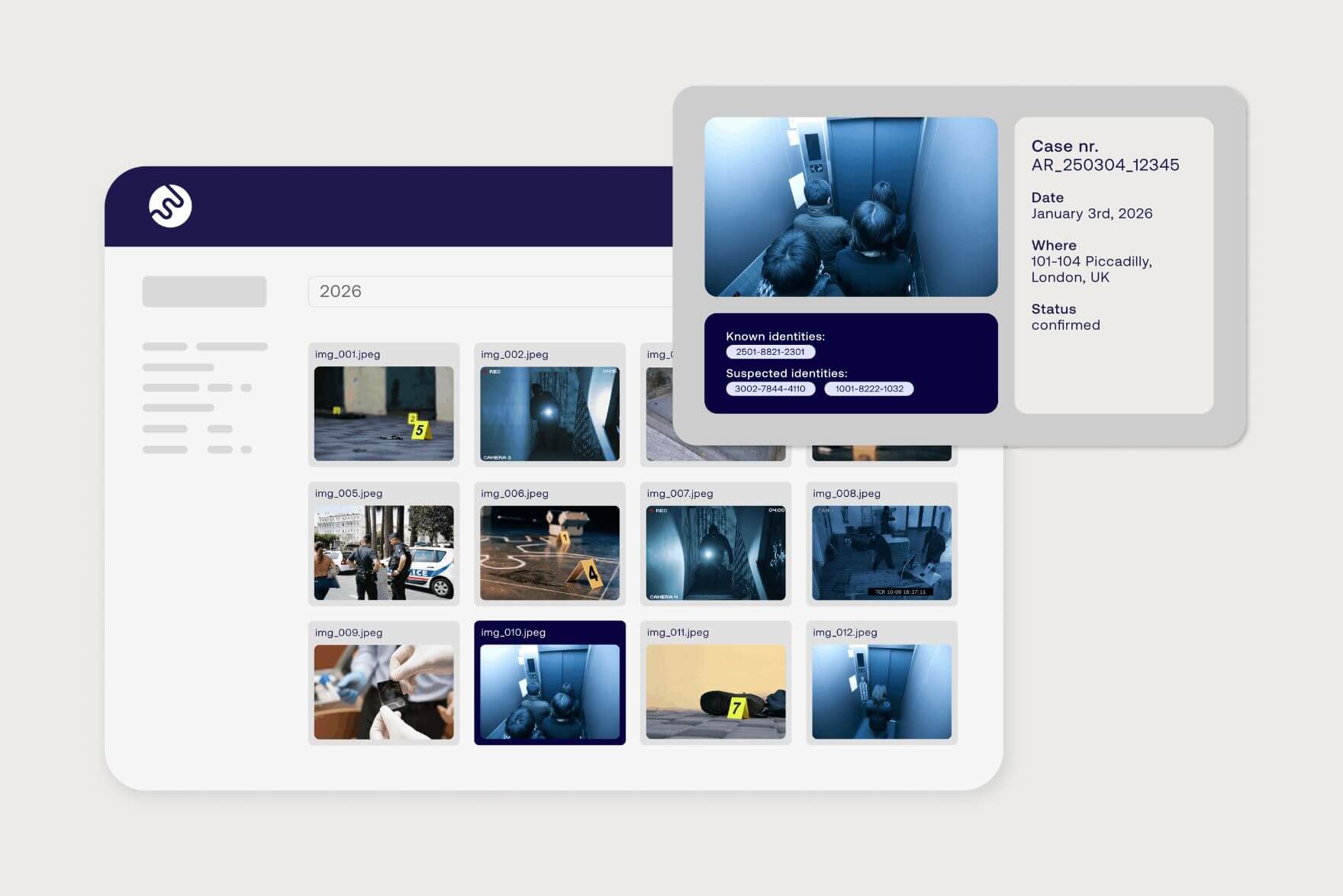
Functionally, a DEMS acts as the central hub of modern evidence operations. It begins at the point of capture, receiving files automatically from devices such as body cameras or through secure upload tools for third-party material like CCTV videos. From the outset, the system records when evidence entered, who submitted it, and under what circumstances.
Enriching evidence with metadata
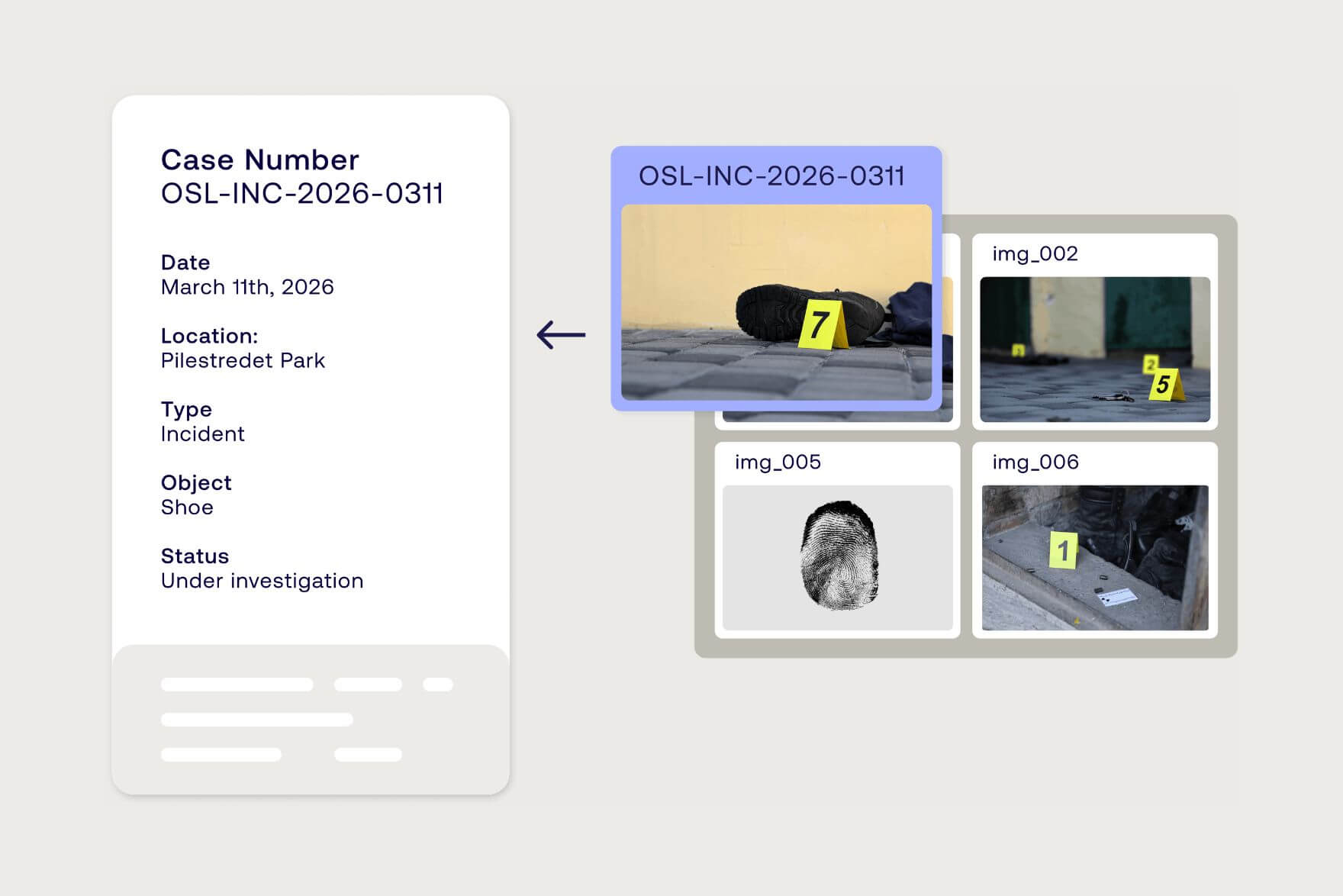
Once inside the system, evidence is indexed and enriched with context. Files are linked to incidents, case numbers, locations, timestamps, and people so that they are structured, organized, and easily findable. Instead of investigators hunting through folders, they can search across thousands of media files using structured metadata.
Read more: Why you should automate metadata tagging in DAM
Access control
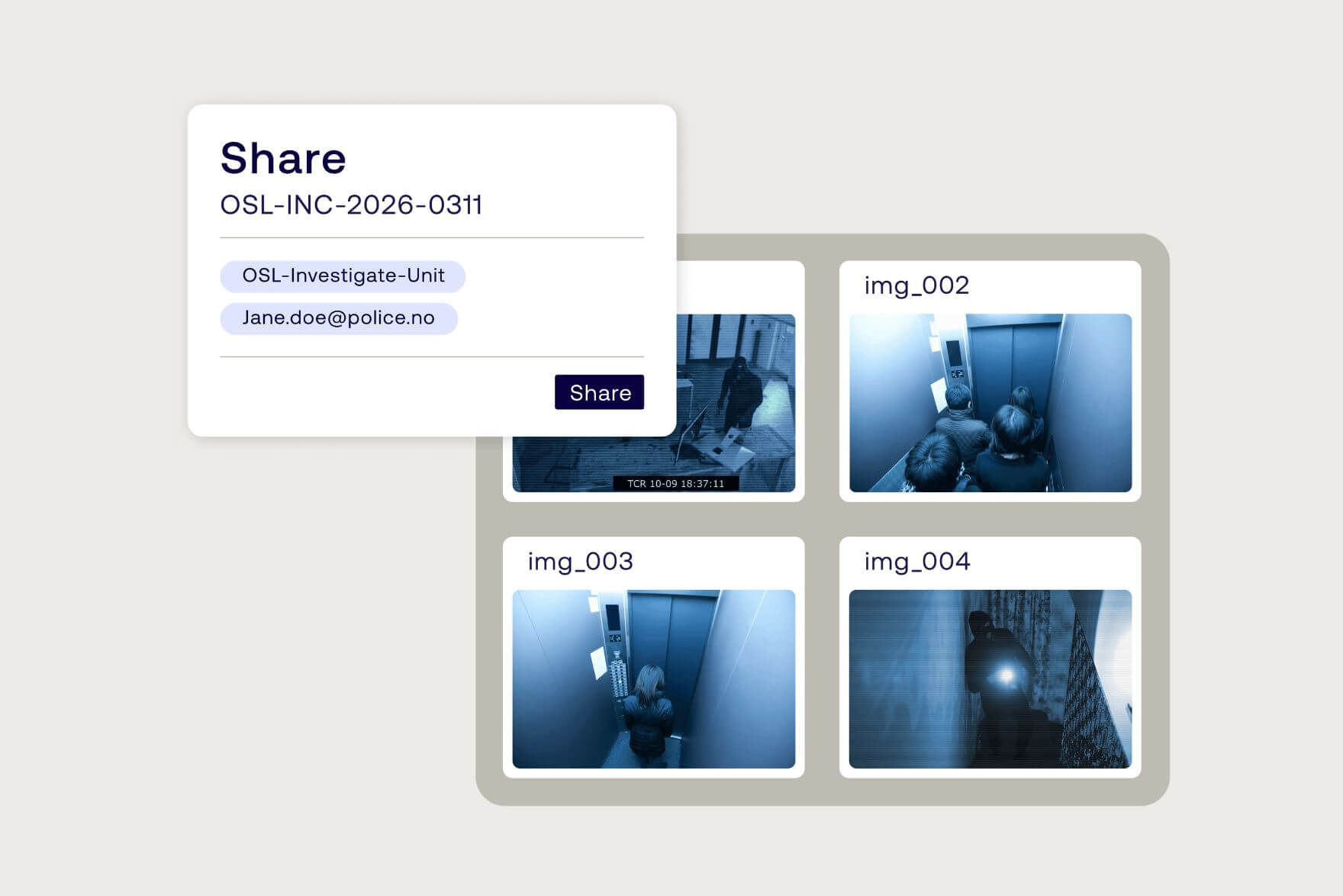
A Digital Evidence Management software also controls access. Different roles, such as officers, detectives, analysts, prosecutors, public defenders, records staff, or judges, see only what they are authorized to see. Every view, download, edit, or share can be logged, creating a transparent audit trail.
Evidence analysis, interpretation, and sharing
Beyond storage, a Digital Evidence Management solution becomes an analysis environment. Users can review videos, search words in photographs or transcripts, compare multiple perspectives of the same event, and assemble evidence into coherent case narratives. When a case reaches court, the same system supports reliable playback, evidence packaging, and secure transfer to legal teams.
What are the most important features of a DEM system?
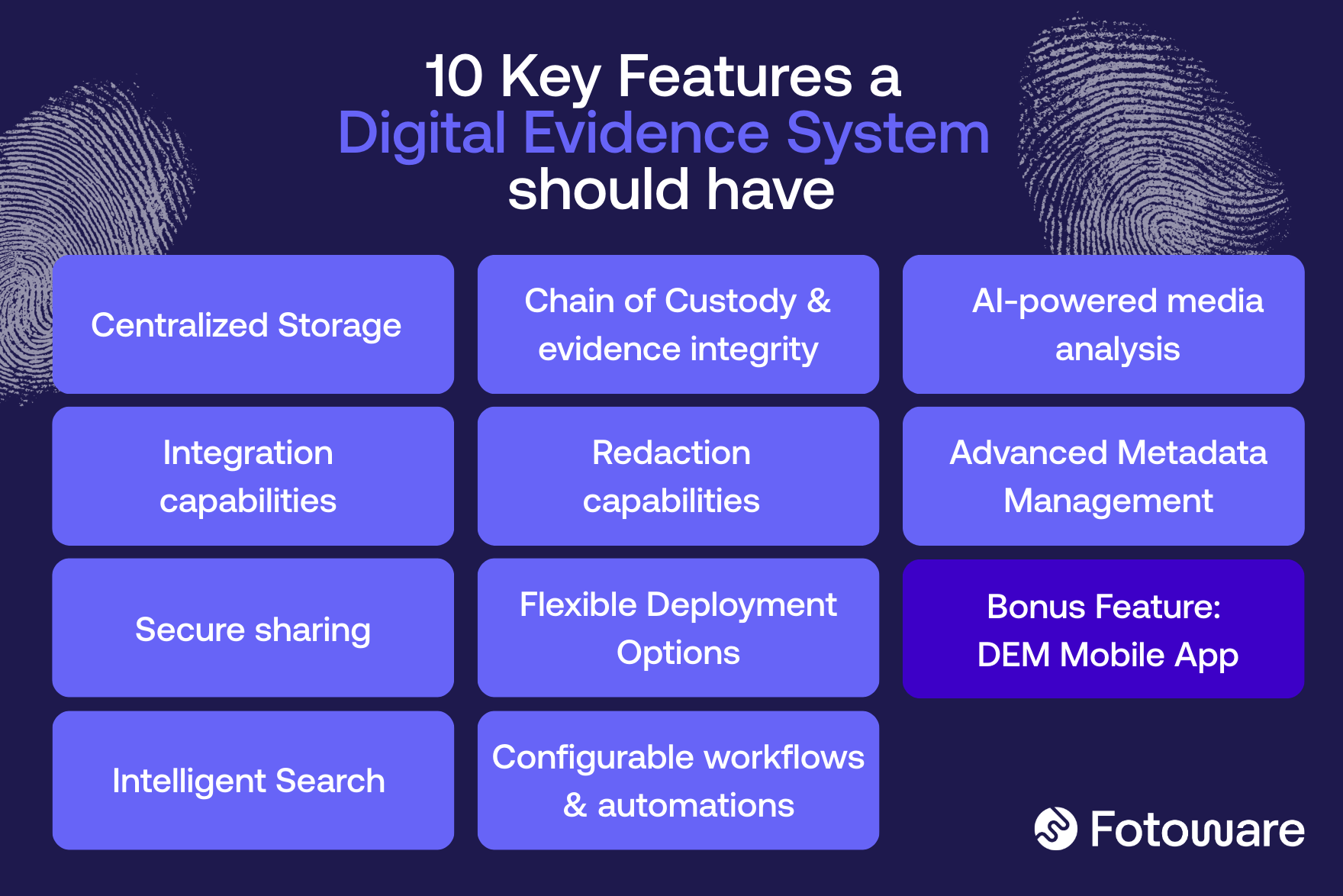
The most critical DEMS features are secure centralized storage, tamper-proof chain of custody, intelligent search, and structured metadata management. Also having flexible deployment options, redaction capabilities, controlled sharing, and automated retention policies integrated into a single platform are of essence.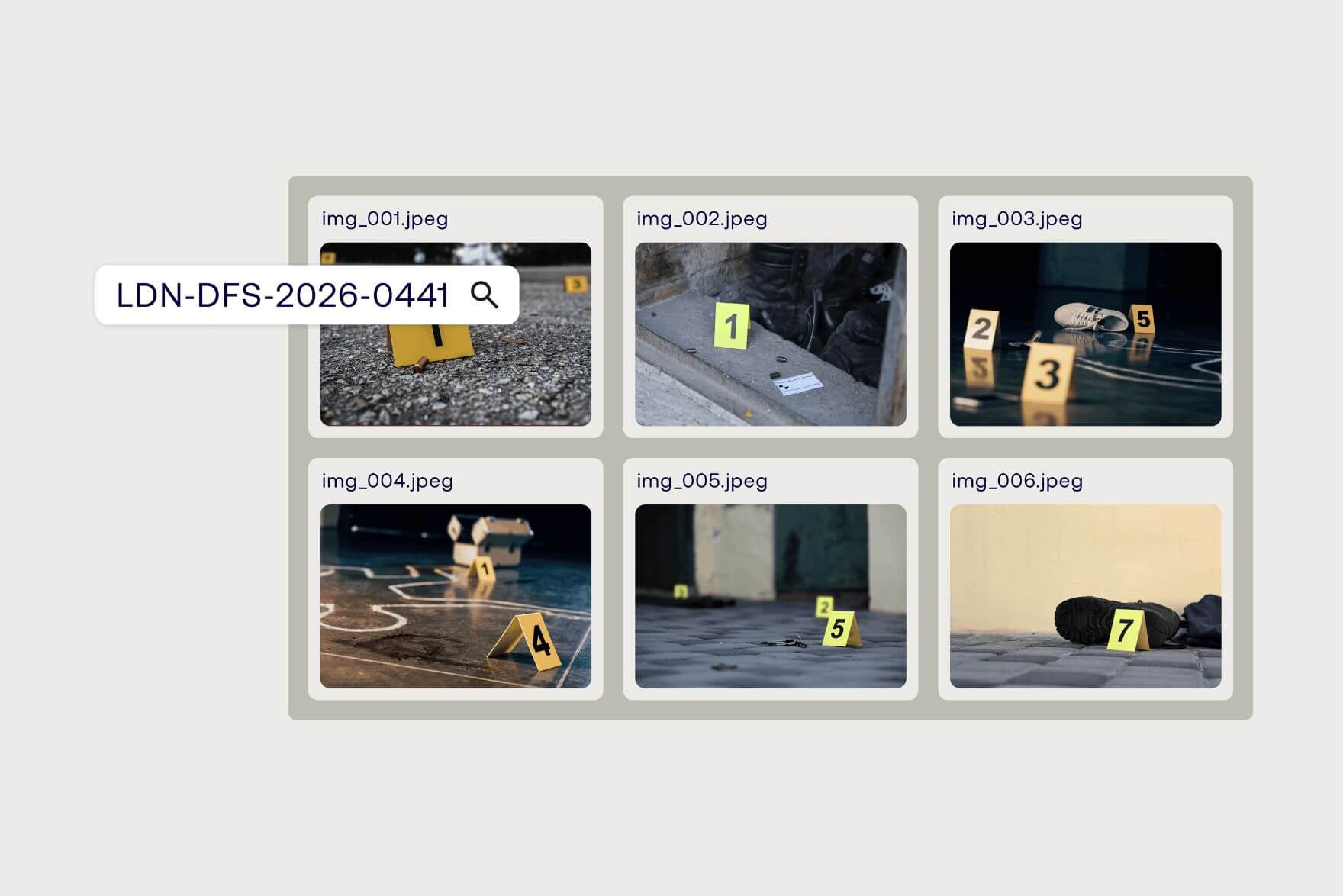
1. Centralized storage
Centralized storage is foundational because it eliminates scattered files and creates one trusted source of truth. Without this, even the best analytics or sharing tools are ineffective.
2. Integration capabilities
Consequently, integration capabilities are essential. Modern DEM solutions should be equipped to gather evidence from diverse sources and seamlessly interact with existing systems, ensuring seamless flow of media files without creating isolated data silos.
4. Workflows and automation
To ensure seamless processes in an integrated DEM environment, configurable workflows and automation are critical. They support approval processes, access requests, retention policies, and legally mandated actions such as deletion, instead of relying on manual intervention.
Read more: Flow - The ultimate DAM automation tool
5. Chain of custody
A non-negotiable capability of a DEM system is the support of a strong chain of custody and evidence integrity to ensure that originals remain untouched, every action is logged, and evidence can be traced from capture to courtroom.
6. Intelligent search
Intelligent search is a defining feature of modern DEM. Its true power lies in structured metadata, filtering, and clear metadata governance rather than free-text search alone. Strong DEM systems enable organizations and users to refine results by case number, date, location, device, officer, evidence type, or incident, turning search into a controlled investigative process.
7. AI-powered capabilities
AI-powered capabilities increasingly complement DEM features by accelerating analysis, creating actionable insights, and strengthening metadata quality. AI can also support smarter tagging by suggesting standardized keywords based on visual content, context, or patterns in existing cases, reducing inconsistencies across users.
Read more: Intelligent AI-powered media analysis with Fotoware and T3K
8. Advanced metadata management
Advanced metadata management is another pillar. The ability to consistently tag evidence with case details, locations, people, and timelines makes large evidence collections usable rather than overwhelming. Good DEM systems balance manual tagging with automation to improve accuracy and adoption.
9. Redaction capabilities
Redaction capabilities are increasingly essential as public records demands grow. Modern systems allow bulk masking of faces, license plates, screens, and other sensitive data, reducing the time required to prepare material for release while maintaining compliance.
10. Secure sharing
Secure sharing ties everything together. Instead of burning DVDs or using ad-hoc file transfers, agencies can digitally share evidence with partner agencies, prosecutors, defenders, and courts while preserving audit trails and file integrity.
11. Flexibility in deployment
Finally, DEM solutions require flexibility in deployment. Some institutions operate in cloud-first environments while others must retain on-premises infrastructure due to regulatory, security, or operational constraints.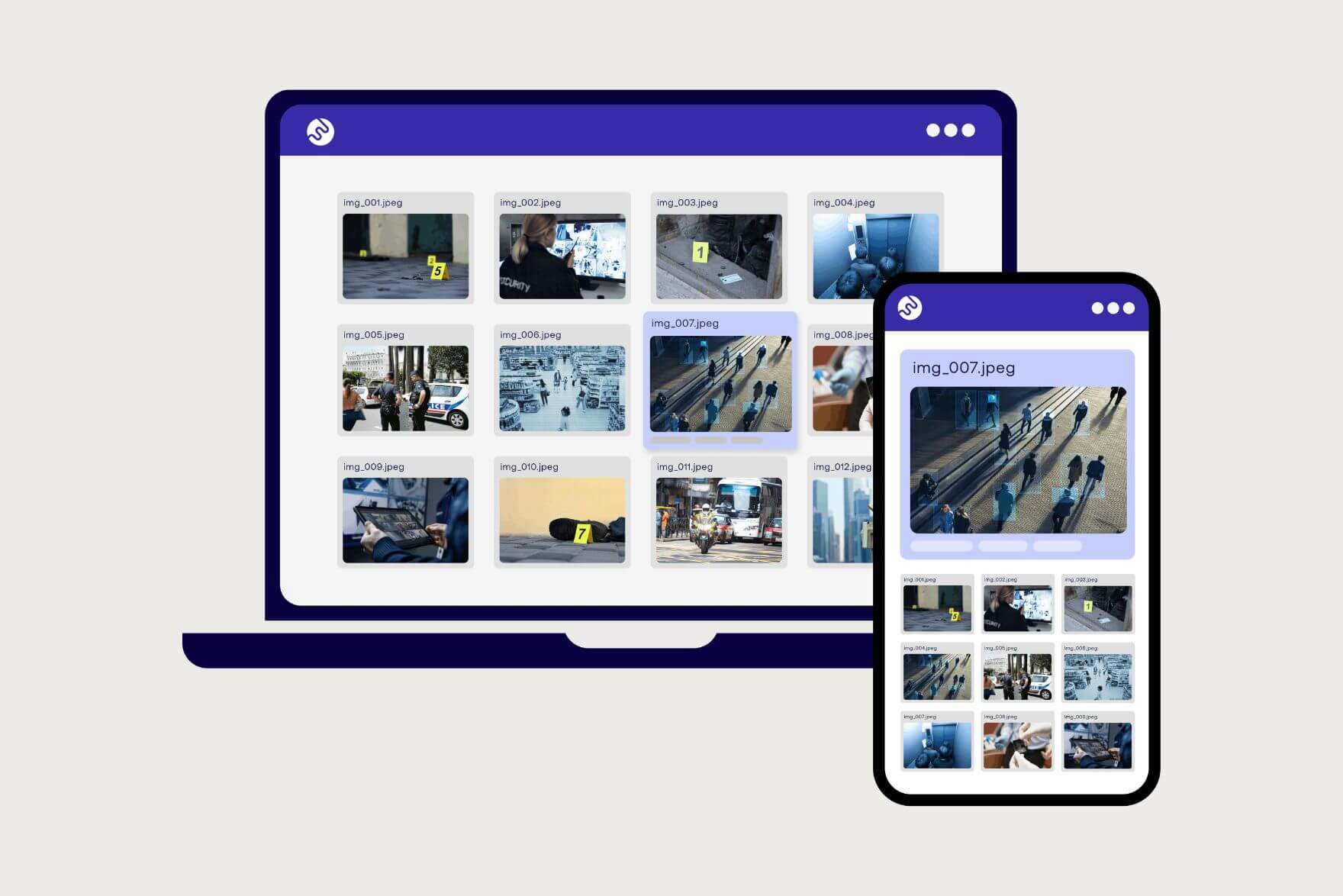
Bonus feature: DEM System Mobile App
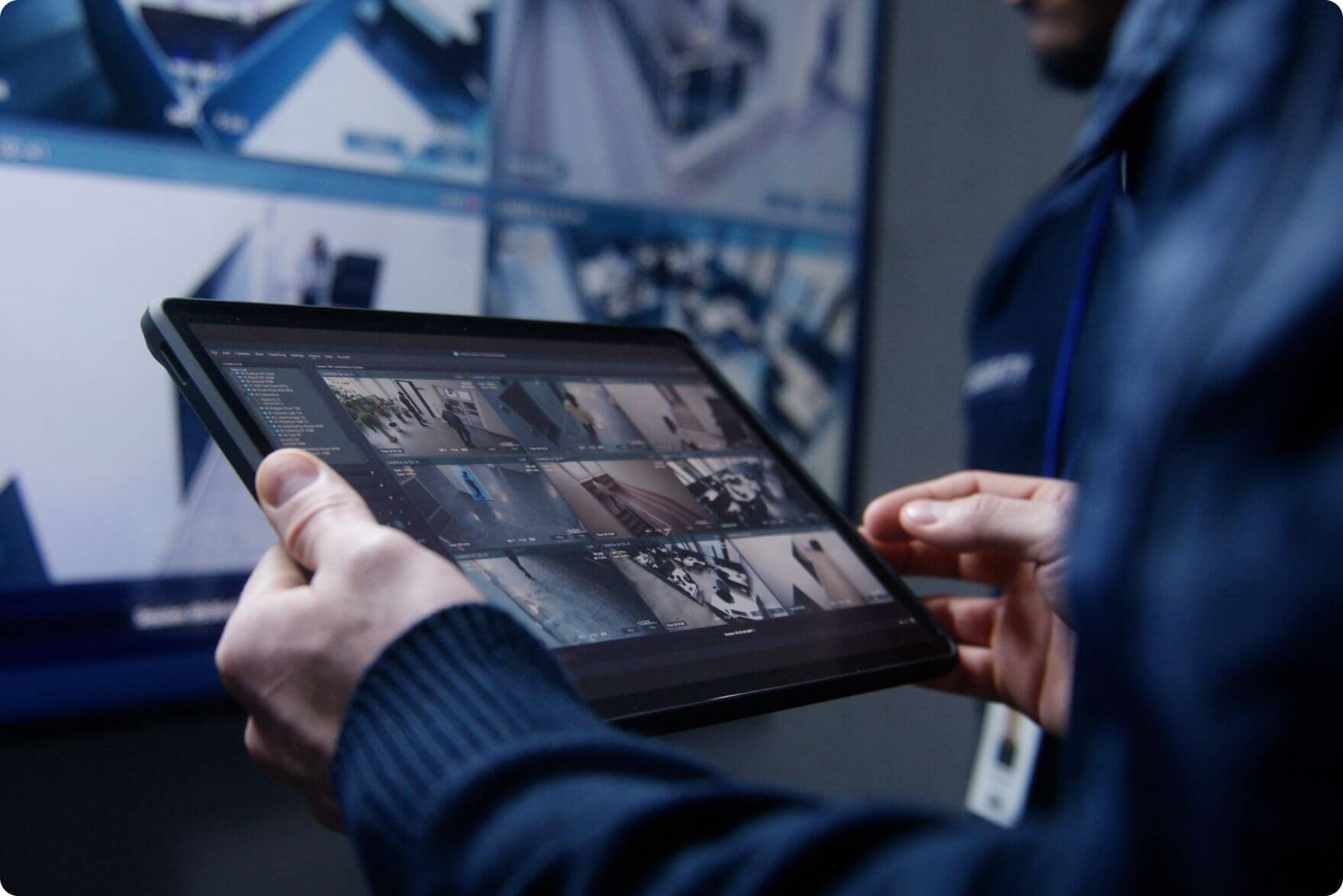
There are a few modern DEM platforms that also offer a secure DEM mobile app that extends evidence management directly into the field. Through a controlled mobile environment, officers can access up-to-date case materials and images without having to return to a workstation.
An app also enables direct capture and upload of photos and video into the central evidence repository, eliminating the need to store material on personal or unauthorized devices.
This reduces the risk of improper handling, data leakage, or loss of evidence integrity while ensuring that all digital material is ingested consistently and remains fully traceable within the official system.
Read more: The Fotoware DAM Mobile App: Asset Management in your pocket
What challenges does a DEM system solve?
A DEM system solves the problems of managing the influx of large amounts of evidence effectively, fragmented tools, manual workflows, security risks, incompatible file formats, public records backlogs, and inconsistent handling by creating a unified, governed, and technology-enabled approach to digital evidence management.
Data fragmentation
Perhaps the most visible challenge is data fragmentation. Many agencies still rely on multiple disconnected tools for their digital evidence files. A DEMS replaces this patchwork with a single environment where evidence is connected to cases and people.
Manual processes
Manual processes are another major pain point. Searching drives, converting files, copying data to USBs, or physically transporting media wastes time and introduces risk. DEM automation reduces touchpoints and standardizes handling.
Security and integrity risks
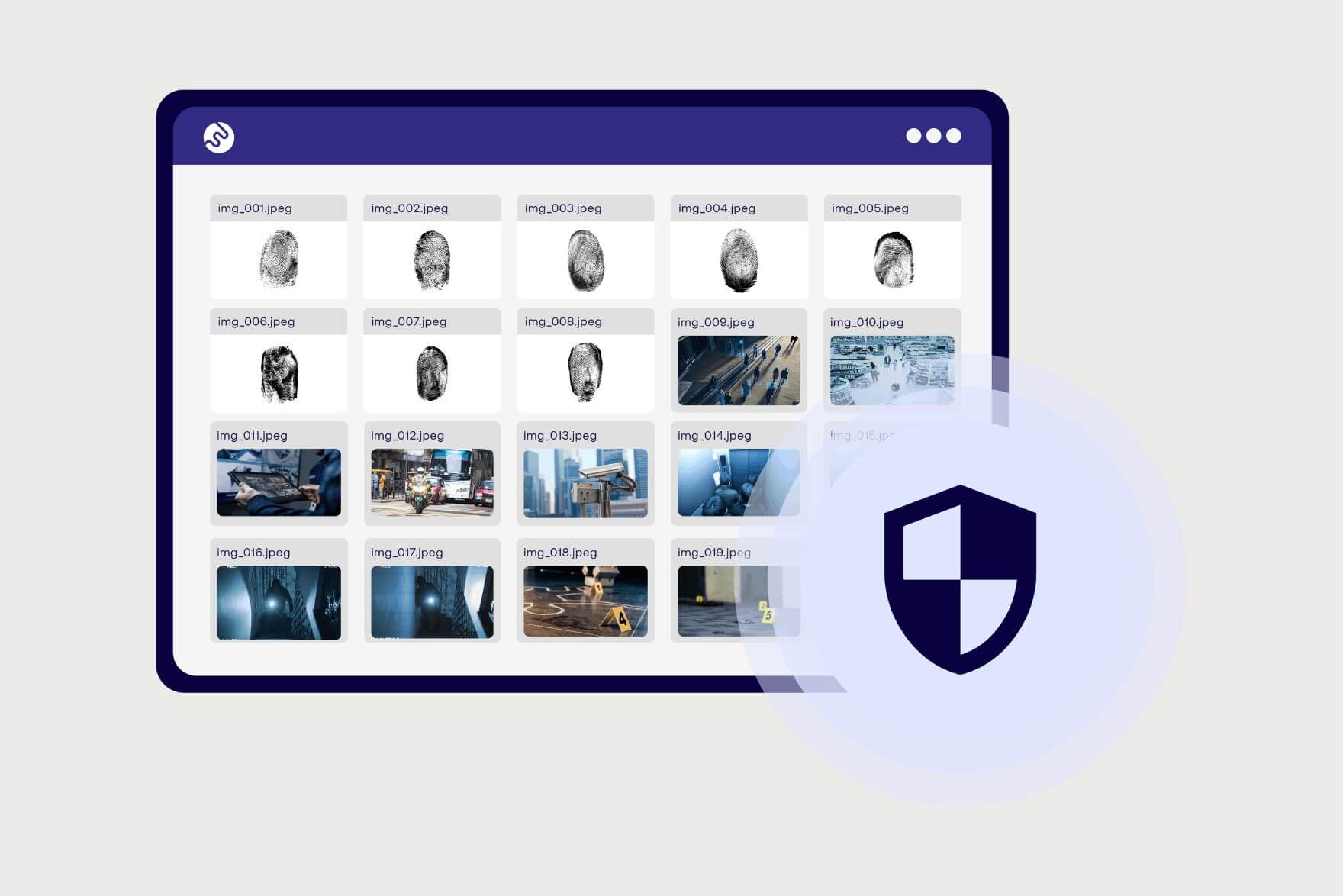
Security and integrity risks are mitigated. When storing evidence across laptops, local servers, or users’ unsecured cloud tools, it is vulnerable to loss or tampering. A DEMS provides encryption, role-based access, and unchangeable originals to protect evidence integrity.
Workloads for investigators and evidence managers
The high workloads for investigators and evidence managers present a different challenge. DEM systems streamline processes involving digital evidence through automated workflows, helping agencies meet legal obligations more efficiently.
DEM reduces inconsistency
Finally, DEM reduces inconsistency. When every unit, investigator, or district follows different practices, evidence quality varies. A unified system enforces common standards, for example in metadata, vocabulary, and workflows across an organization.


How to find the best DEM system?
The best DEM solution is one that combines strong security, advanced metadata capabilities, flexible hosting options, integration with existing systems, and practical training and support that ensure real-world adoption.
Security
Security should be the starting point. Agencies must prioritize encryption, clear audit trails, role-based permissions, and compliance with relevant public safety standards. A system that cannot defend evidence integrity will struggle in court.
Advanced metadata capability
Advanced metadata capability differentiates modern systems from basic repositories. Look for reliable tagging options, powerful search, and tools that help investigators connect related pieces of evidence rather than simply store them.
Deployment strategy
Deployment strategy matters as well. Agencies should understand whether a solution is cloud-based, on-premises, or hybrid, and how pricing scales with growing amounts of evidence and users. Predictable costs are critical for long-term planning.
Read more: SaaS or On-Premises: What system to choose?
Integration capability
Integration capability is another key criterion. A strong DEM system should integrate with core tools like Case Management Systems, Records Management Systems, or ERP systems, rather than creating new data silos.
Training and change management
Finally, agencies should assess training, change management as well as vendor industry expertise and support, since even the best technology fails without user adoption and user satisfaction.
The Digital Evidence Management vendor market
The DEM market has matured from basic image storage tools into a strategic category of justice technology focused on end-to-end evidence lifecycle management, driven by explosive data growth, public transparency demands, and the rise of AI-assisted investigations.
Analyst research, including Gartner’s Digital Evidence Management Market Guide, frames DEM as a mission-critical capability rather than an optional add-on. Gartner typically emphasizes that leading platforms must cover the full evidence lifecycle, from capture and ingestion to analysis, sharing, courtroom presentation, and retention, rather than excelling at only one stage.
A recurring theme is integration capability. Law enforcement and defense agencies increasingly prefer platforms that connect with existing records systems instead of replacing them entirely. Scalability and security are also top evaluation criteria, as digital evidence volumes continue to grow.
Gartner analysts advise agencies to avoid viewing DEM purely as a technology purchase. Instead, they recommend treating it as a transformation of evidence operations that requires governance, training, and clear policies alongside software.
Looking forward, the market is moving toward deeper AI integration, stronger cross-agency collaboration, standardized evidence formats, and tighter links between investigations and digital courts.
How Fotoware supports Digital Evidence Management
Fotoware provides a secure digital asset management platform that helps law enforcement agencies, defense teams, and investigative organizations manage large volumes of digital evidence.
Built around structured metadata and secure media handling, the platform supports the workflows required to collect, organize, review, and share multimedia evidence throughout investigations and legal processes.
With Fotoware, teams can:
- ingest digital evidence from multiple sources
- organize evidence using structured metadata and powerful search
- preserve evidence integrity with tamper-proof audit trails
- integrate with case management and records systems to connect evidence with investigations
- securely share material with investigators, prosecutors, and courts
Fotoware is recognized in the 2026 Gartner Market Guide for Digital Evidence Management Systems, highlighting its role in helping organizations manage and operationalize digital evidence at scale.
Discover how Fotoware supports secure digital evidence workflows:


On this page