The system behind the photo: DAM at the 2026 Football World Cup
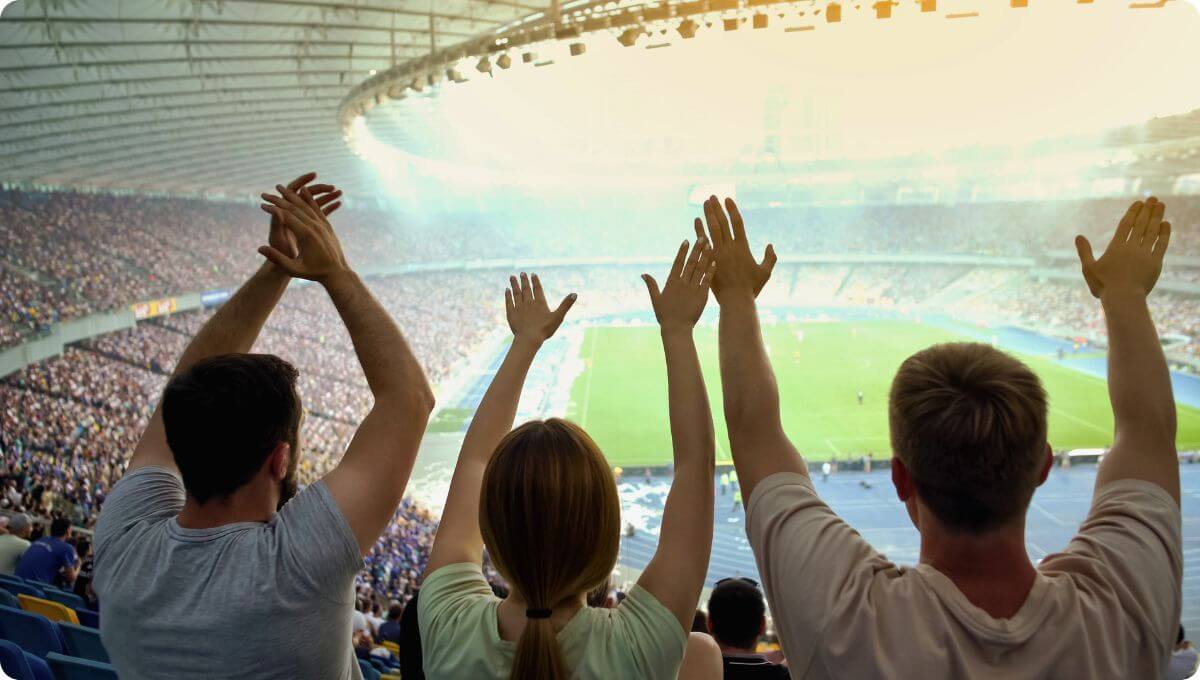
The Football World Cup is one of the most popular events on the planet. Over the next weeks, billions of people will follow it and a large share of what they see will not be the live broadcast at all. It will be a still photograph: the goal, the save, the celebration, online within seconds of it happening.
Behind that speed is a system most fans never think about: When a goal goes in, the photo of it can land on newsroom desks on another continent, in a sponsor's feed, and in the player's club archive within a minute, already tagged with the rights and metadata needed to use it.
That is the work of a Digital Asset Management (DAM) system. It sits at the center of the operation, taking each image from the camera, tagging it, and sending it to the relevant stakeholders. Football gets the attention and the DAM is what keeps the coverage moving on time.
The biggest World Cup ever: 104 matches, 16 cities, three countries
This is the largest tournament in the competition's history. For the first time, 48 teams take part, co-hosted by Canada, Mexico, and the United States across 16 host cities and 104 matches over roughly five weeks, ending with the final on 19 July.
That geography is the first challenge for anyone publishing the event. Coverage has to be consistent whether a match is played in Vancouver, Mexico City, or New Jersey, and it has to reach a global audience watching all of it at the same time.
Thousands of images a match, each one on a deadline
The volume of photos taken is significant. A single high-profile match can draw hundreds of accredited photographers and each produces thousands of frames before the final whistle. Across 104 matches, the total runs into the millions of images, all needing to be reviewed, tagged, and distributed.
This is the core job of a DAM system: bringing in large volumes of images, keeping them searchable, and moving them out without delay. It matters because each image loses value quickly. A photo of a decisive goal is worth a great deal in the minute it happens and far less by the next morning. A DAM keeps each step connected, so a strong image does not sit waiting and miss its window.
Read more: Content Lifecycle in Media: how to automate the entire journey with Flow
One photo, many owners
Everyone wants the picture of the moment, but rarely the same file. A national federation needs approved shots for its own channels. Clubs want their own players. Broadcasters need high resolution on a tight clock. Sponsors want the frames where their branding is visible and cleared for use. Internal teams and the press have their own requirements, and the usage rights attached to an image often differ from one audience to the next.
So, the difficult part is not capturing the image. It is delivering the right version to the right party, with the correct permissions already attached. This is where the DAM does its most valuable work: it holds each image with its metadata and rights and uses that information to send every audience the version they are cleared to use, automatically rather than by hand.
From camera to audience in under a minute: the path images take
In a highly efficient operation, an image can move from the capture to a published page in under a minute. The DAM system is the hub each image passes through, and the speed depends on setting up each stage in advance. This is the journey a photo might take:
-
The image leaves the camera immediately. As soon as the photographer takes the shot, it is sent over to an editor at the venue or back at the office, so review can begin while play continues.
-
The DAM sorts it on arrival. When the file reaches the system, it is checked against rules set up beforehand, grouped by match and moment, and given its first metadata automatically.
-
An editor reviews and decides. Working inside the DAM, a person selects the frame that best tells the story and confirms or adjusts its metadata. This is the step that software cannot replace.
- The DAM delivers it to the right people. Once tags and permissions are set, the system releases the image to the audiences cleared for it, each receiving the version that fits their use.
Because the DAM runs this in the background, photographers can stay focused on the match, knowing the desk already has what it needs.
Read more: SNS Group: bringing sports to life through photography
How the DAM uses metadata and business rules to move images
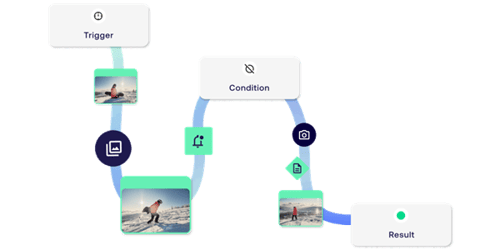
At these volumes of assets produced at the Football World Cup, speed is only possible when the system handles the repetitive work, and metadata is what drives it. Once images carry consistent, structured information, the DAM can act on that information without a person involved.
A rule in the DAM might add a sponsor's name when a related keyword appears, assign an image to the right match using a code the photographer attached when shooting it, or set access based on where the upload came from. Where players wear a clear identifier, such as a squad number, the system can recognize it automatically and tag every frame it appears in. The routine sorting happens on its own, so editors can spend their time on decisions rather than data entry.
Discover Flow, the ultimate DAM automation tool. >
Where AI takes weight off
AI works inside the DAM to expand what these workflows can handle. Recognizing faces, identifying logos and objects in a shot, and suggesting metadata automatically all reduce the manual workload, and these capabilities continue to grow. Used as a support tool for the people running the desk, AI turns what used to take hours of sorting into minutes, freeing editors to focus on the images that matter most.
Read more: How to streamline sports photography with AI and metadata
Built to stay fast when the volume peaks
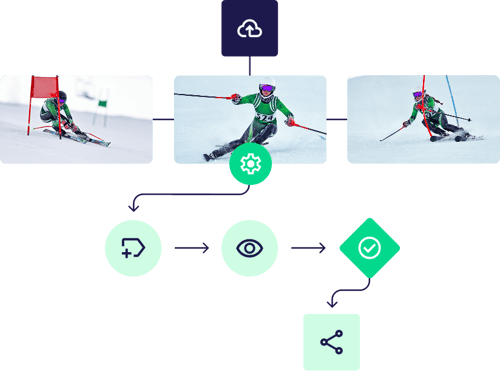
All of this depends on a DAM system that holds up when the load increases. High-volume ingestion, reliable FTP transfer, and a cloud platform that scales through an intense few weeks without being re-engineered mid-tournament are what keep the pipeline running.
Fotoware DAM platforms have supported major sporting events since the 1994 Winter Olympics in Lillehammer, when handling large image volumes was still a mostly manual and analog process. Expectations have grown since then, but the core need has not: photographers, editors, and publishers want their best work in front of an audience before the moment passes, and the DAM is what gets it there.
Read more: DAM systems: the secret heroes behind 2026 Winter Olympics publishing workflows
Speed is the competitive advantage at the 2026 Football World Cup
The organizations that publish the strongest visual coverage of this World Cup will be the ones whose images arrive first, correctly tagged and cleared for use. That advantage often comes from their DAM system behind the scenes, and from the workflows and metadata model that move every image to where it needs to go, well before kick-off.
The demands of a World Cup are extreme, but the principles are the same for any team handling high volumes of images on a deadline. If you want to see how leading organizations structure their workflows, download our guide to essential DAM workflows. And if you would like to talk through your own setup, book a time with one of our experts.

On this page