NEW: CONTENT AUTHENTICITY Get proof behind every image
Verify where content came from, what happened to it, and whether AI was involved.
Know what you are publishing, and prove where it came from
|
|
Keep the chain of authenticity intact

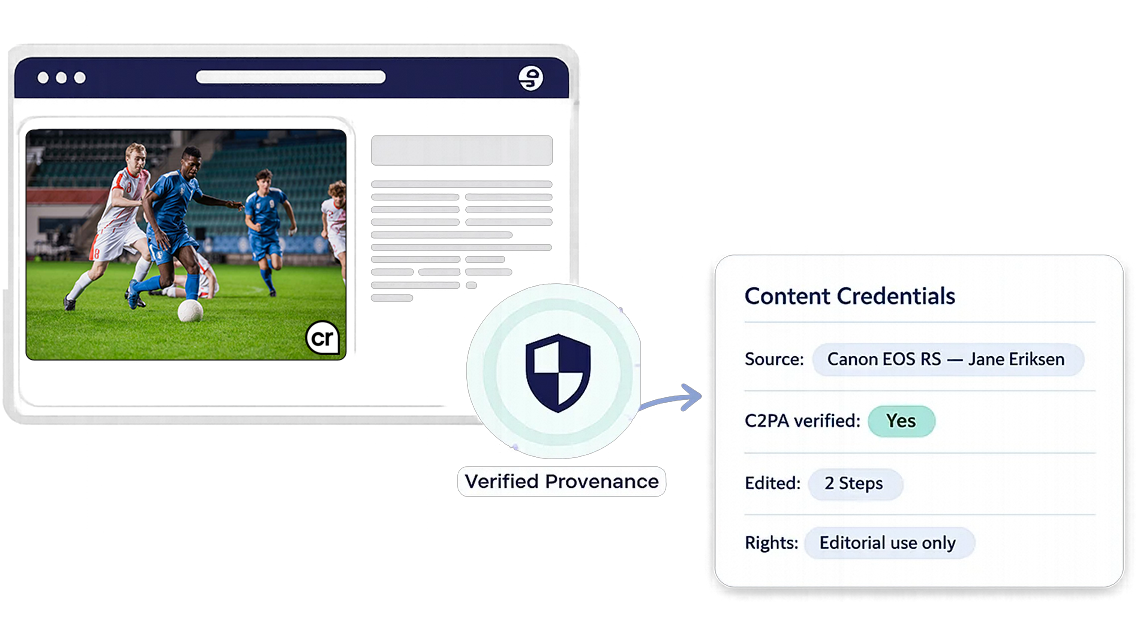
![]() ✓ Credentials intact Captured on a C2PA-enabled camera Two edits recorded, both signed No AI involvement |
![]() ✗ No credentials found Origin unknown Edit history unavailable AI involvement cannot be ruled out |
Authenticity doesn't stop at capture. Fotoware DAM preserves the proof as images move across people, systems and workflows.
Fotoware DAM and Content Credentials Provenance that survives the asset lifecycle
Combine Content Credentials with Fotoware DAM to preserve content authenticity across the asset lifecycle, helping you prove provenance, increase AI transparency, and protect organizational trust.
-
Prove content provenance
Maintain a traceable record of an asset’s history to respond confidently when content is questioned.
-

AI transparency
Identify, label and filter our AI-generated or -modified content.
-

Protect organizational trust
Prevent misleading or manipulated assets from damaging the organization’s credibility.
|
|
Content Credentials is the label that establishes a tamper-evident record of claims about the images that carry them: where the file originated, the edits recorded in its history, and whether AI was used. Compatible cameras, Photoshop and the major AI tools support them. |
Live webinar - 25 SEPT 2026
Proving what’s real: The role of DAM in Content Authenticity
Discover why Content Credentials can break and how digital asset management helps keep them intact throughout the content lifecycle.
Register now →
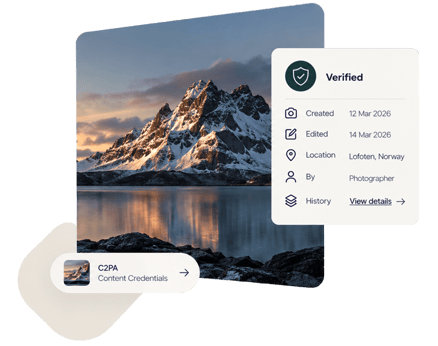
CAPABILITIES Preserve proof across the entire content lifecycle
PRESERVE EXISTING CONTENT CREDENTIALS END-TO-END Proof that travels with the asset
Authenticity is only valuable if it survives the systems, workflows and channels content moves through. Fotoware helps preserve existing Content Credentials provenance information added through supported tools as assets move from ingestion through editing, distribution and publication.
- check Content credentials intact from capture, through ingestion, editing and publication
- check Proof travels with the file
TRACK & INSPECT PROVENANCE Keep a signed record of changes
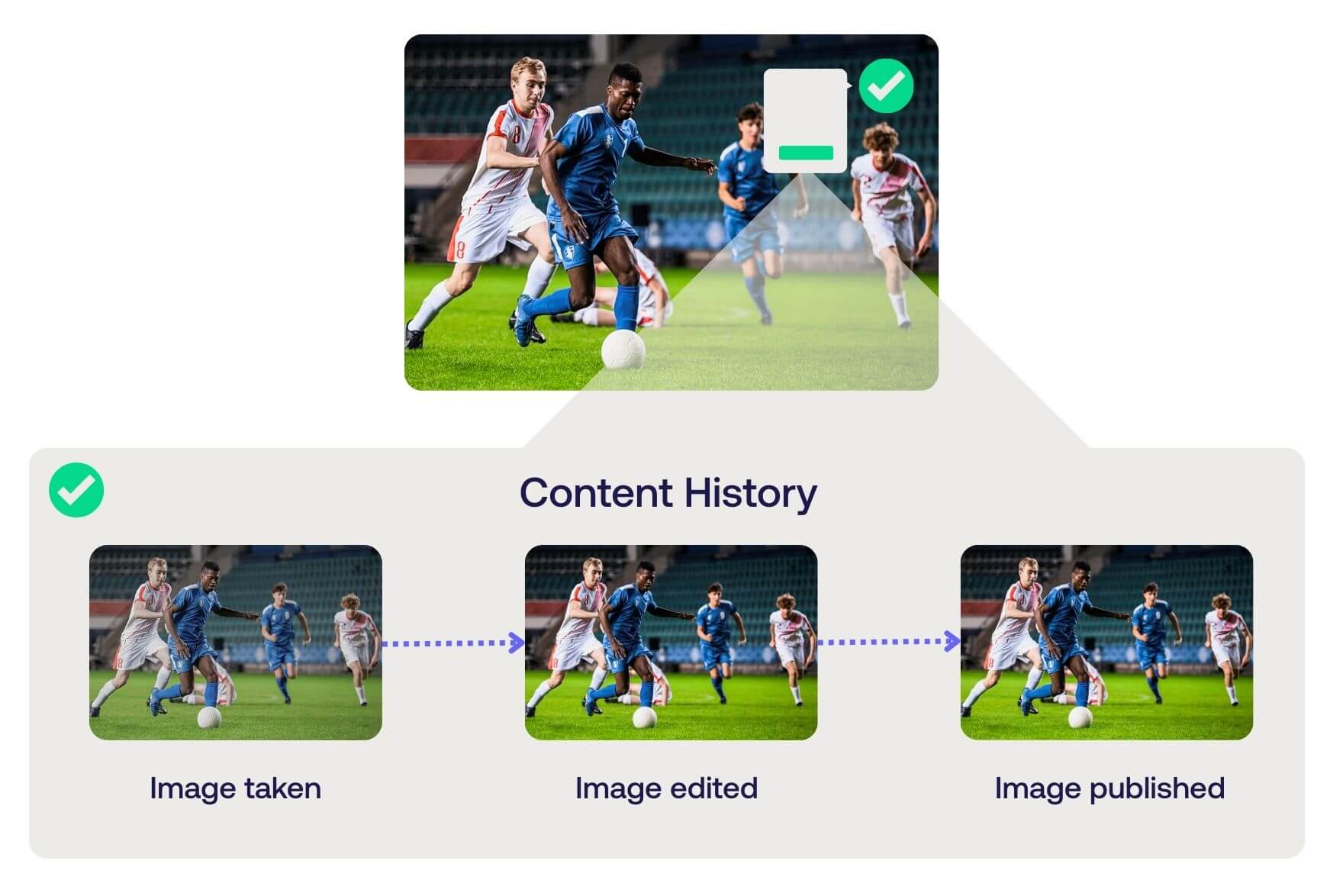
Knowing an image was edited is rarely enough. To establish trust, you need to know what changed, who made a change, which systems was involved, and whether AI was used. Fotoware tracks edits made in the DAM and in C2PA-compatible tools as signed steps in the asset’s provenance history.
- check Full edit history per file
- check Systems and tools used, recorded
- check AI editing recorded as a signed step
- check Later signatures captured in sequence
VERIFY CONTENT BEFORE PUBLICATION Spot provenance gaps before you publish
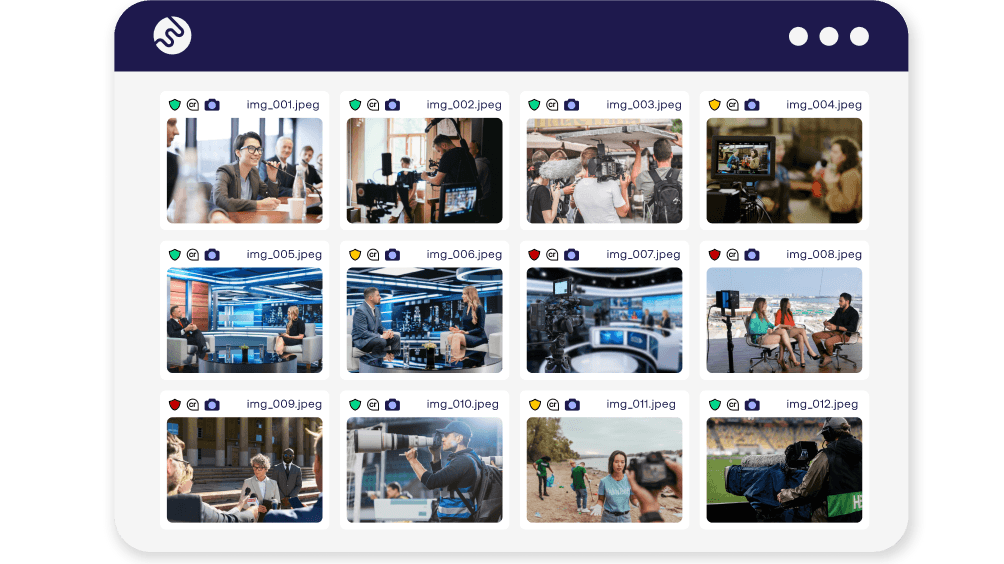
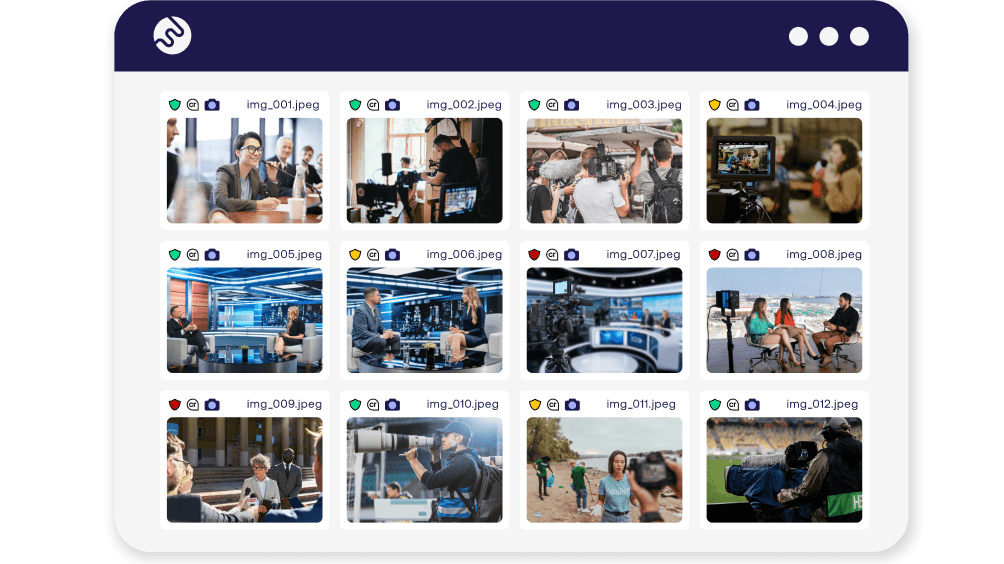
Anyone handling content should be able to verify authenticity instantly. Fotoware makes provenance, AI involvement and verification status visible directly where people work.
- check Marker icons on images indicating recorded edits, visible to every DAM user
- check Recorded AI involvement marked clearly
- check Filters can exclude unverified or AI modified images from search
- check Indicator for camera origin
"We can't tell you an unsigned image is genuine or fake. What we can do is allow you to build a workflow where images arrive with their history intact, and leave with it too, so you can prove its history."

FAQs about content authenticity
-
Content Credentials is metadata, stored inside the image file alongside IPTC and EXIF.
Unlike ordinary metadata, they are cryptographically signed, so they cannot be rewritten. Cryptographically signed means the record is sealed with a digital signature. It proves who created it, and any change to the file or its history breaks the seal, making tampering visible.
Platforms and publishers can choose to display the Content Credentials icon alongside a verified image, which is how a reader knows the origin can be checked, in the same way a padlock signals a secure website. -
The icon, a small "cr" pin, means the image carries a Content Credential you can inspect. Clicking it opens the record stored inside the file: where the image came from, which tools were used on it, whether AI was involved, and who signed it.
It is an invitation to check, not a verdict. The icon does not claim the image is unedited or accurate. A heavily edited photograph can carry a valid credential, because the credential records the editing rather than forbidding it, and an AI-generated image from a tool that signs its output carries one too, with the record saying so. -
No.
Absence of credentials proves nothing either way. It means the image carries no record of its origin, the same as almost every photograph taken before the standard existed.
Credentials give you certainty about the images that carry them, they are not a detection tool for the ones that do not.
-
No. Whether the icon appears is decided by the platform or publication showing the image, not by the file itself.
LinkedIn and Adobe display it today, and more publishers are adopting it, but a website or print page will only show it if its owner chooses to.
What matters is that the credential is there to be read. If it survives your workflow intact, the icon can be displayed wherever a platform supports it, and anyone can verify the image even where it is not shown. If the credential is lost in export or conversion, there is nothing left to display anywhere. -
Content provenance is the documented history of an image: where it came from, which tools were used on it, what was changed, and whether AI was involved at any point. It covers the whole journey from capture through editing to publication.
-
Provenance is the record itself.
-
Content Credentials is how that record is carried inside the file, and
-
C2PA is the open standard that defines how it is written and read.
Provenance only holds up if it survives every system the image passes through, which is why it is preserved or lost in the DAM.
-
Get proof behind every image
Show where your images came from, what happened to them, and that nothing was hidden along the way.


C2PA