From managing files to managing trust – A Reimagining DAM 2026 recap

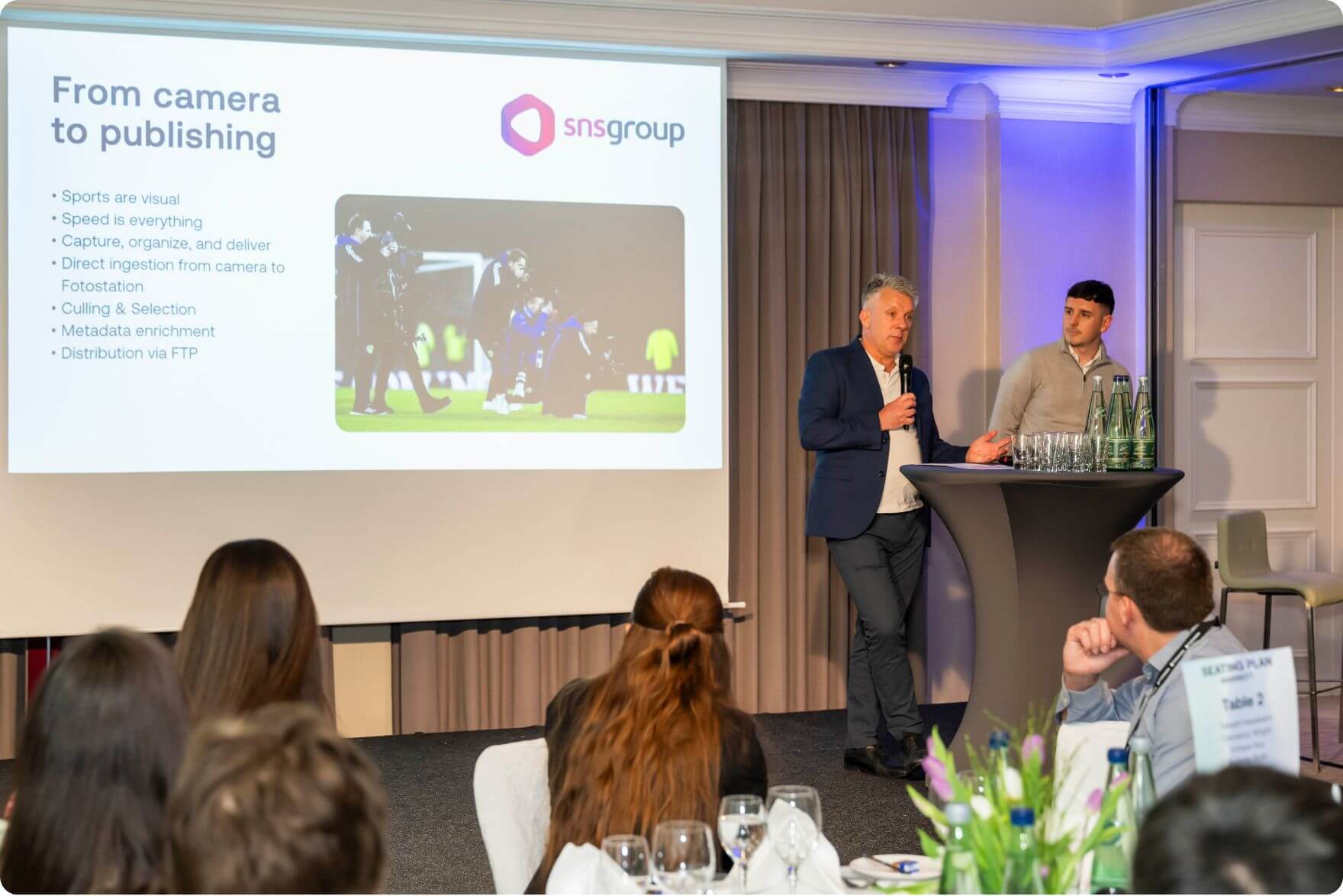
SNS Group – Asset Ingestion
At SNS, a leading sports photography agency in the UK, the focus is on high-performance ingestion workflows where speed is critical.
As Craig Rodger (Deputy Digital Media Manager at SNS) demonstrated, images move seamlessly from camera to publishing through direct ingestion into the image management and photo workflow client Fotostation, where efficient culling and selection, metadata enrichment, and rapid distribution enable near real-time delivery.
In environments like media and publishing, where every second is business critical, workflow efficiency becomes a defining capability for a DAM system.
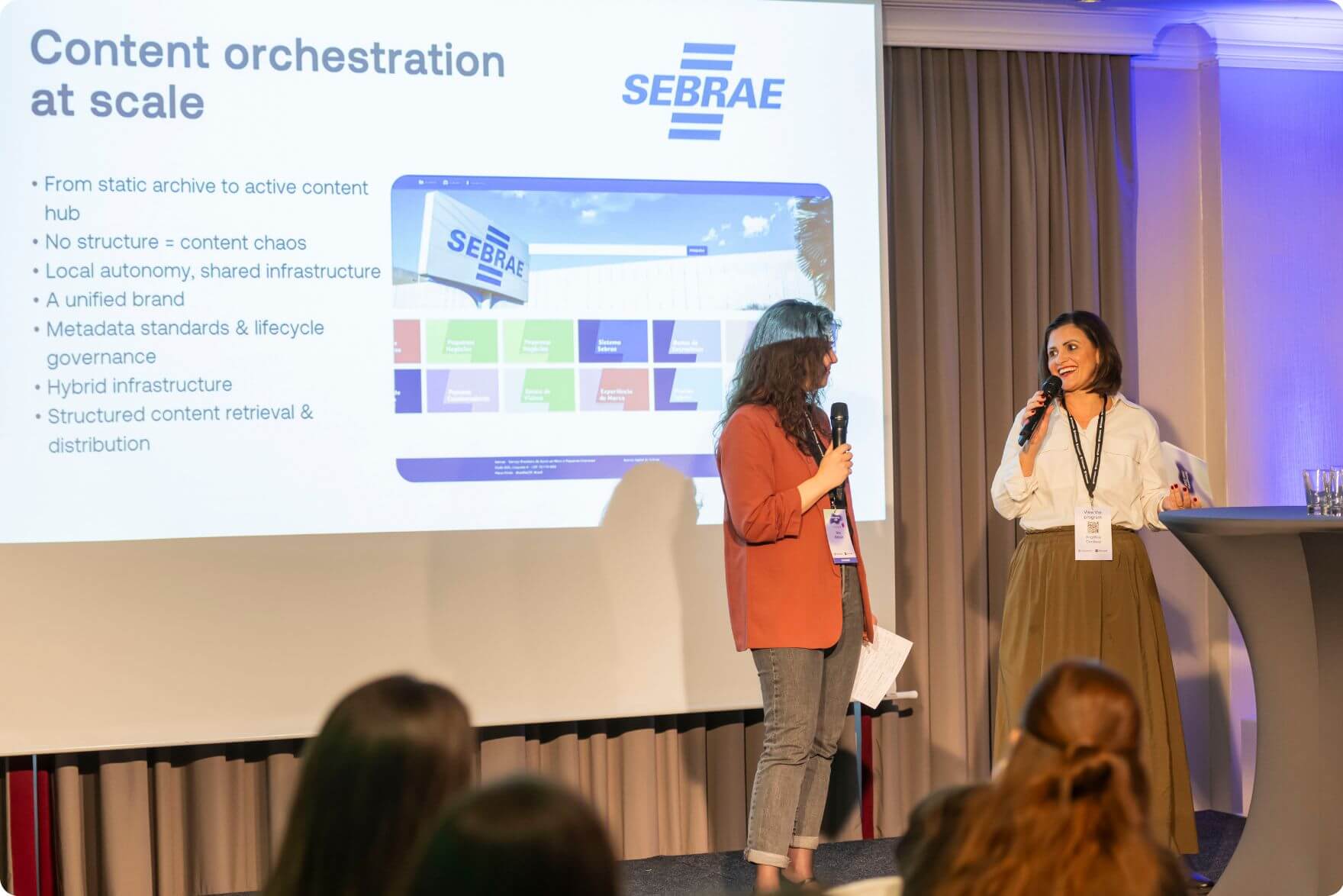
Sebrae – Content Orchestration
Angélica Cordova (Journalist & Communications Specialist) from Sebrae, an organization dedicated to supporting the 23 million micro and small businesses across Brazil, presented their transformation from a static archive into an active content hub.
Through the introduction of metadata standards and ways to keep control of the complete content lifecycle, while maintaining local autonomy within a shared infrastructure, Sebrae has created a scalable model for content orchestration that ensures both consistency and flexibility across a distributed organization.
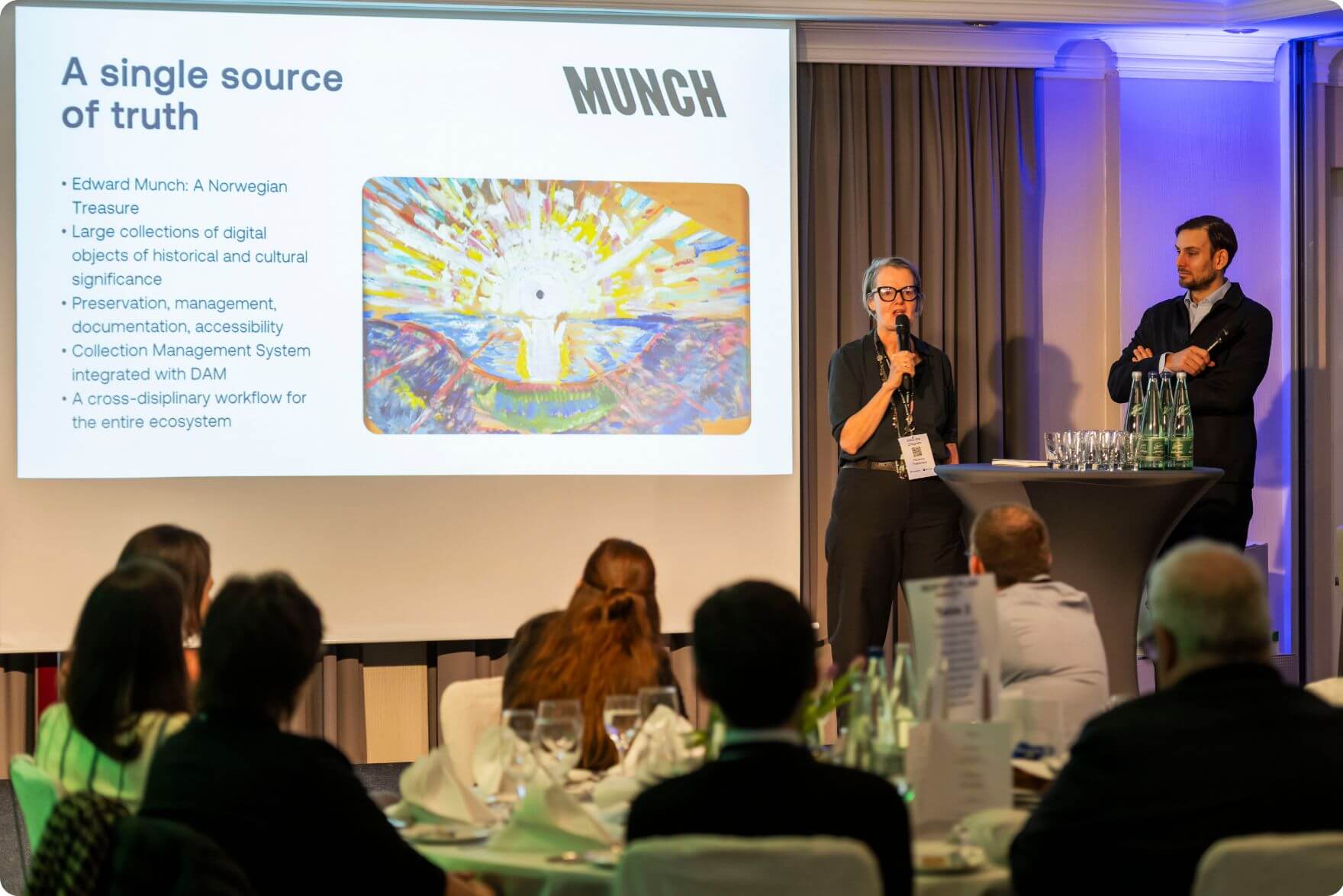
Munch Museum – Data Governance
At the Munch Museum in Norway, Florence Froidevaux (Digital Asset & Collections Management Manager) illustrated how data governance can be embedded into the core of cultural heritage management.
Thanks to an integration of their Collection Management System Axiell with their Fotoware DAM, the museum has established a single source of truth that supports preservation, documentation, and accessibility, enabling a cross-disciplinary workflow that spans the entire institutional ecosystem.
Learn more about the Munch Museum's DAM workflow in this webinar. >
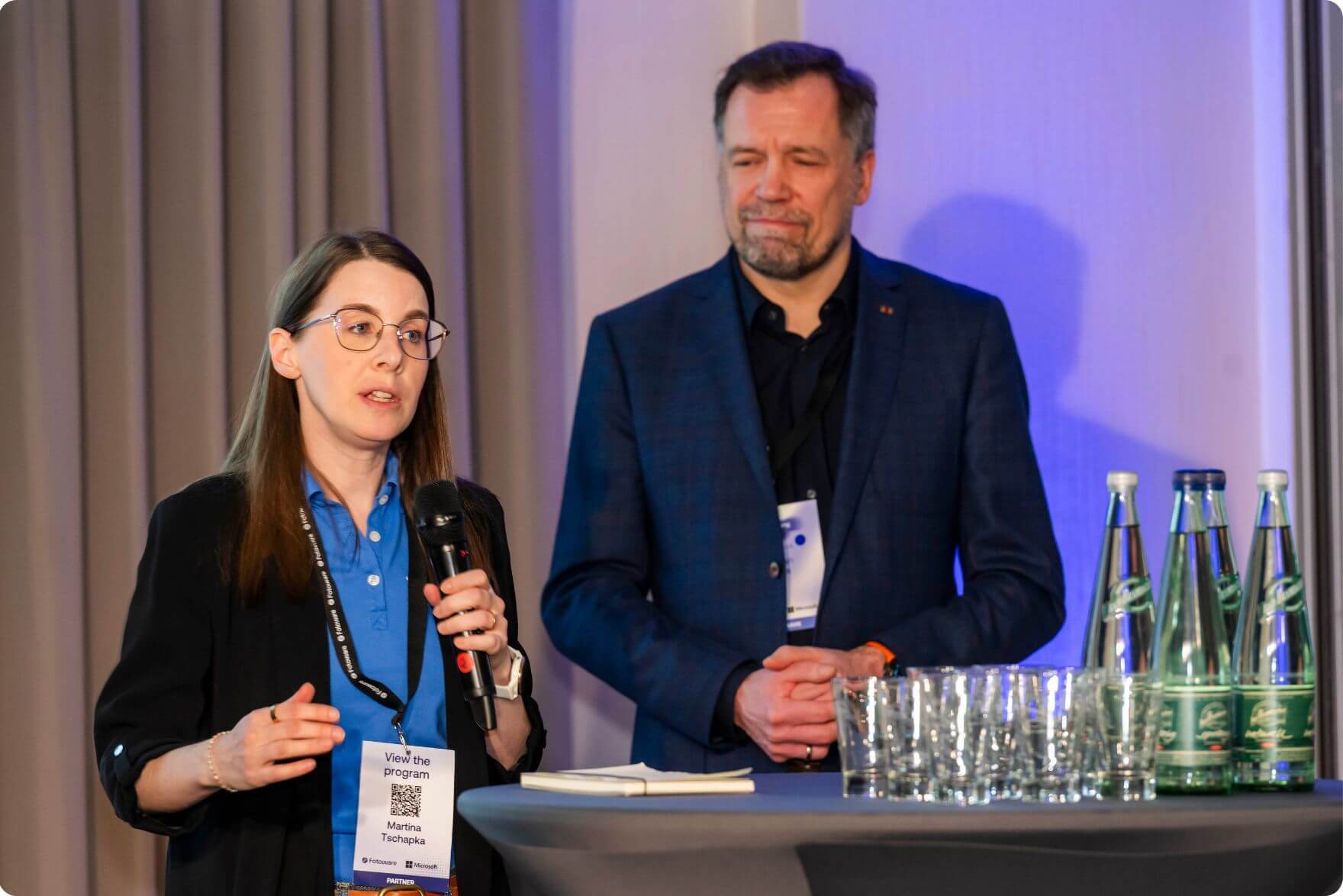
German law enforcement agency – AI-driven image classification
A different perspective came from Martina Tschapka (COO) from our partner T3K, who presented a real-life example of AI-driven workflows developed for an anonymized police force.
Here, artificial intelligence is used to filter, classify, and analyze large volumes of visual evidence, enabling more efficient investigations while maintaining strict control and traceability across systems.
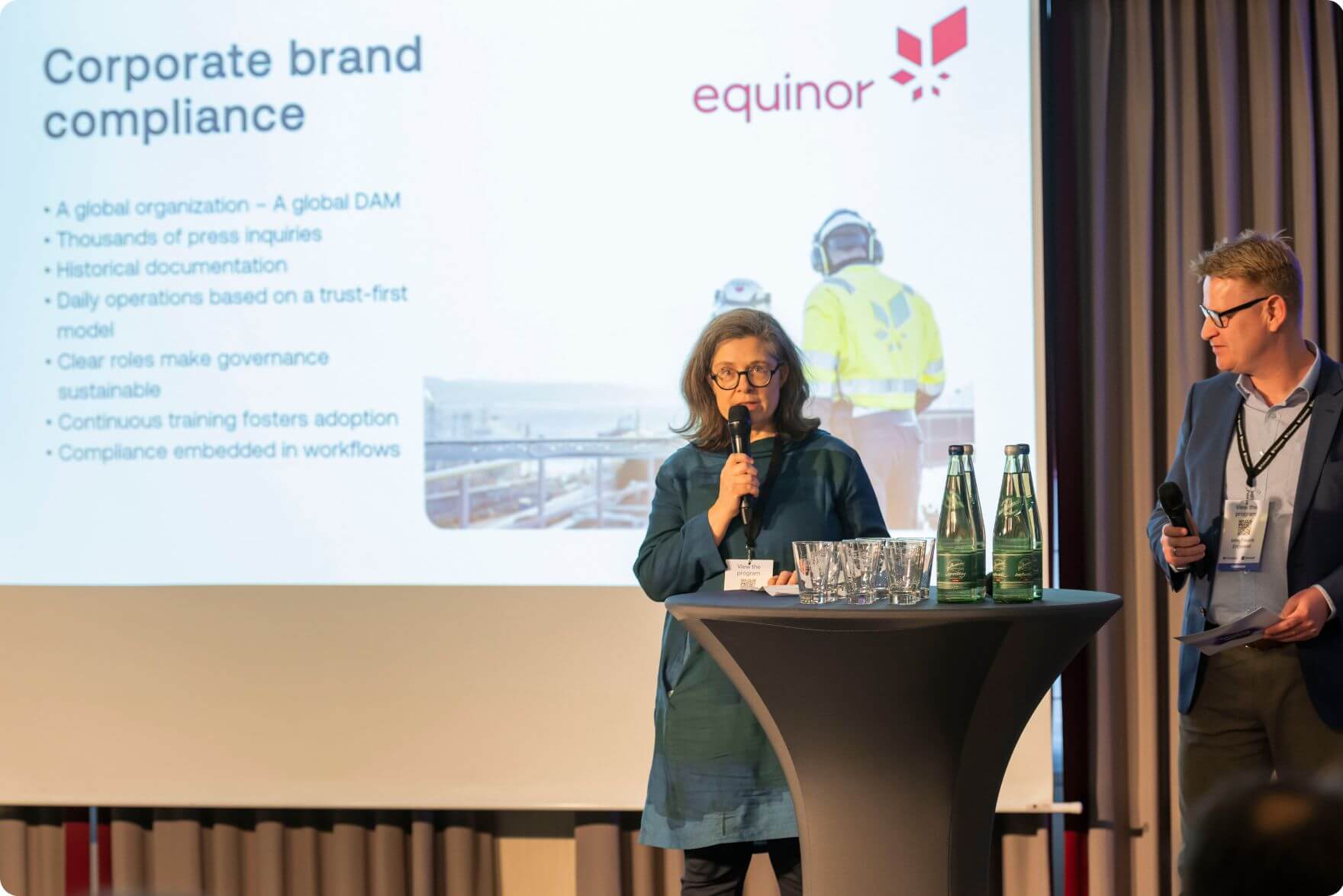
Equinor – Content Control
Line Falk (Principal Consultant for Communication) from Equinor, a global energy company from Norway, showcased how governance can be operationalized at scale within their global DAM. Files need to be selected, approved and distributed at high speed, all while complying with copyright and GDPR regulations.
To do so efficiently, Equinor’s approach to content control is built on clearly defined roles, continuous training, and a trust-first model, where compliance is not enforced after the fact but embedded directly into everyday workflows.
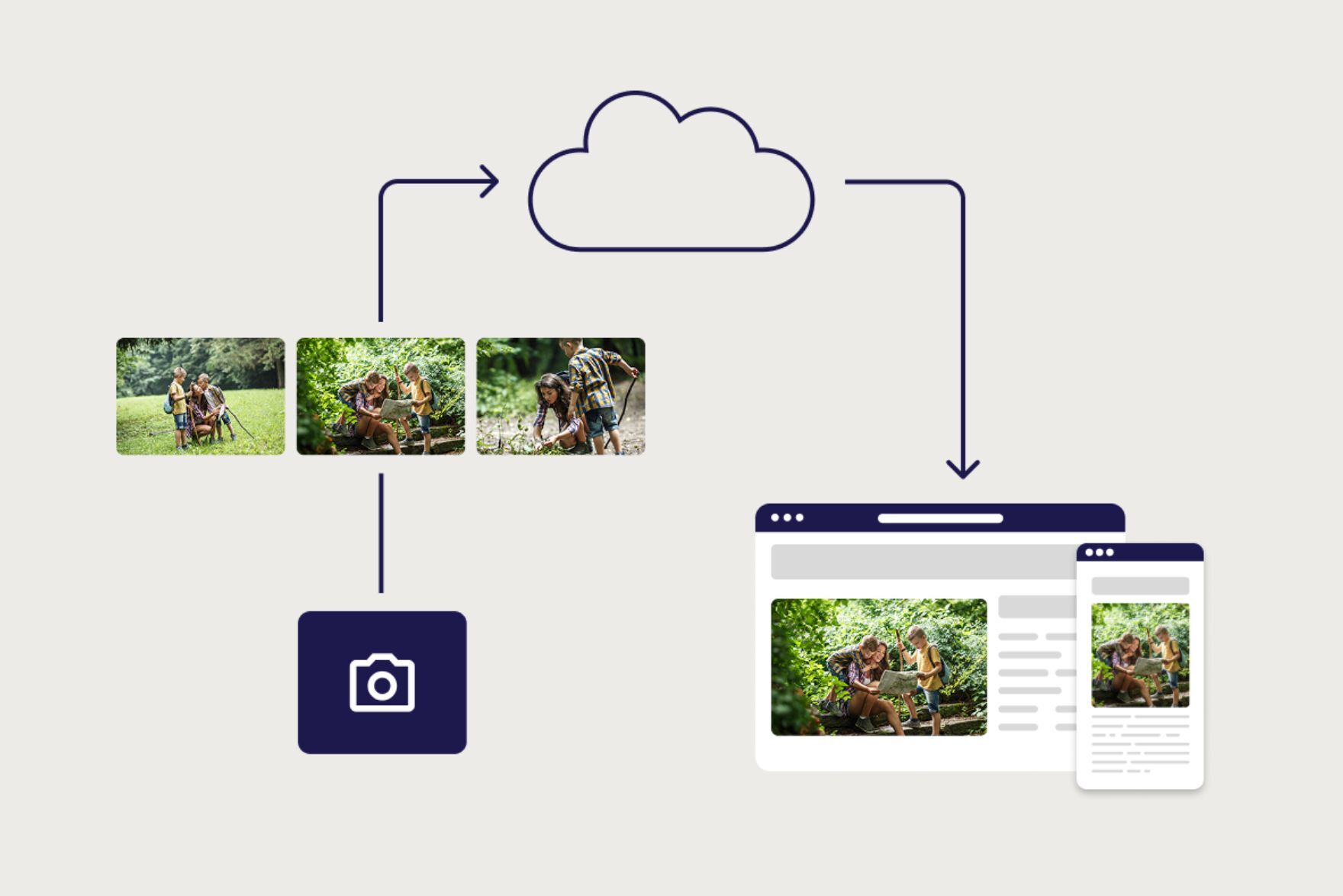
Global football association – Real-time content distribution
A similar emphasis on speed and orchestration emerged in an anonymized use case from a global football association. Here, the entire workflow from image capture on the field to distribution across news outlets, sponsors, and clubs, is optimized for near real-time delivery.
Every step is tightly coordinated, ensuring that content is not only delivered within seconds, but also properly tagged, rights-managed, and ready for immediate use. In environments where visibility and timing directly impact value, this level of workflow performance becomes a competitive advantage.
Learn more: How to streamline sports photography with AI and metadata
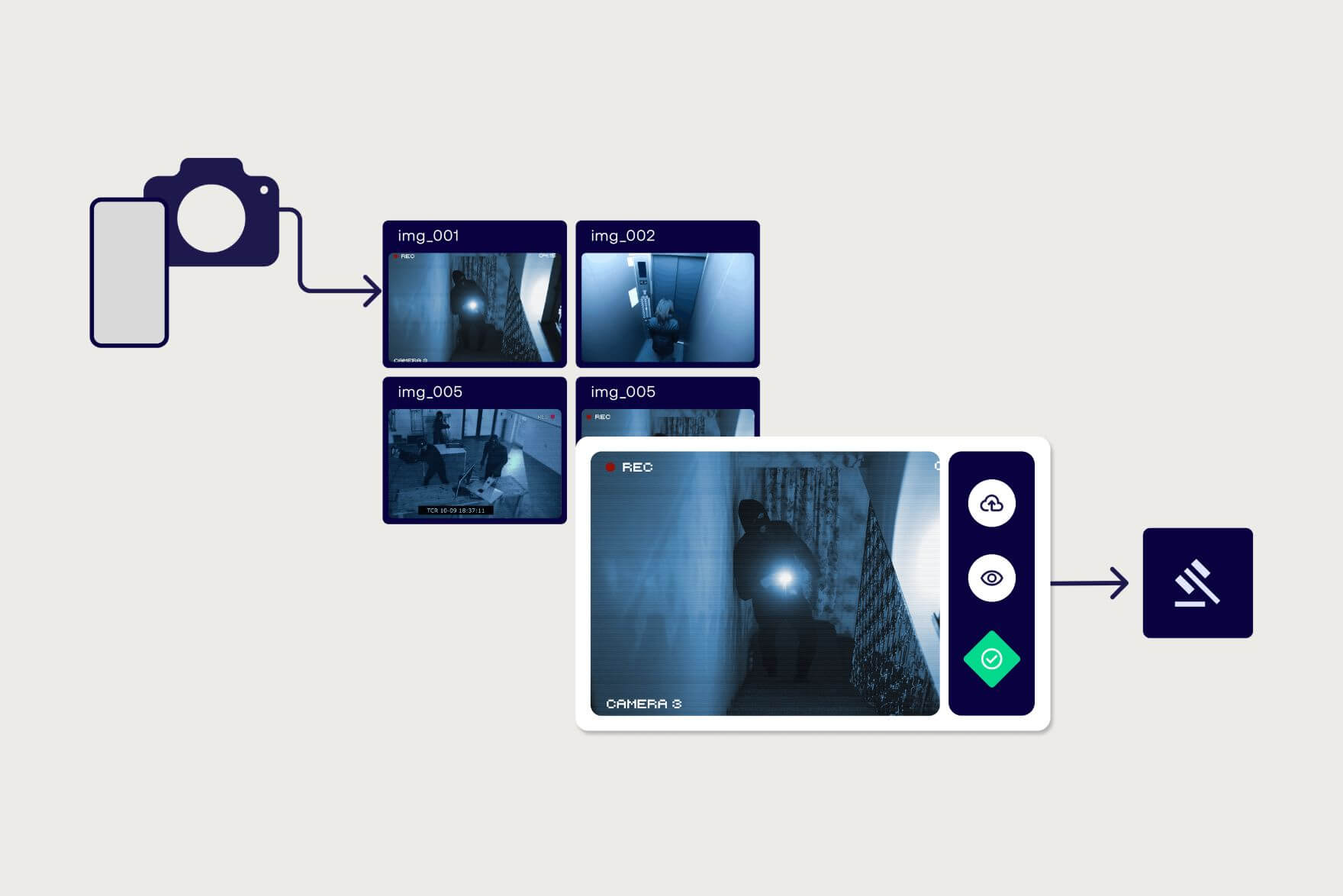
German law enforcement agency – End-to-end evidence management
Another anonymized example from another major German police force highlighted the critical role of DAM in managing the full lifecycle of digital evidence.
From initial capture through to courtroom use, every asset must remain secure, traceable, and verifiable. In this context, DAM is not just supporting workflows but safeguarding the integrity of the entire chain of evidence. It shows how trust is operationalized in a setting where reliability is essential to outcomes.
Learn more about Digital Evidence Management in this article. >
All cases approach DAM from very different industries and different use cases. Yet their stories point in the same direction: organizations that succeed with DAM start with people and processes, then apply technology to enable and scale them. Whether automating metadata enrichment, enabling cross-team collaboration, or embedding governance into the way they work, these examples demonstrate how DAM is evolving into an intelligent workflow engine.
They also highlighted something equally important: the human impact. By reducing manual effort and increasing reliability, these workflows are not only improving efficiency but are reshaping how people work.
From supporting tool to operational platform
This focus on workflows is driving a broader redefinition of DAM’s role inside the organization.
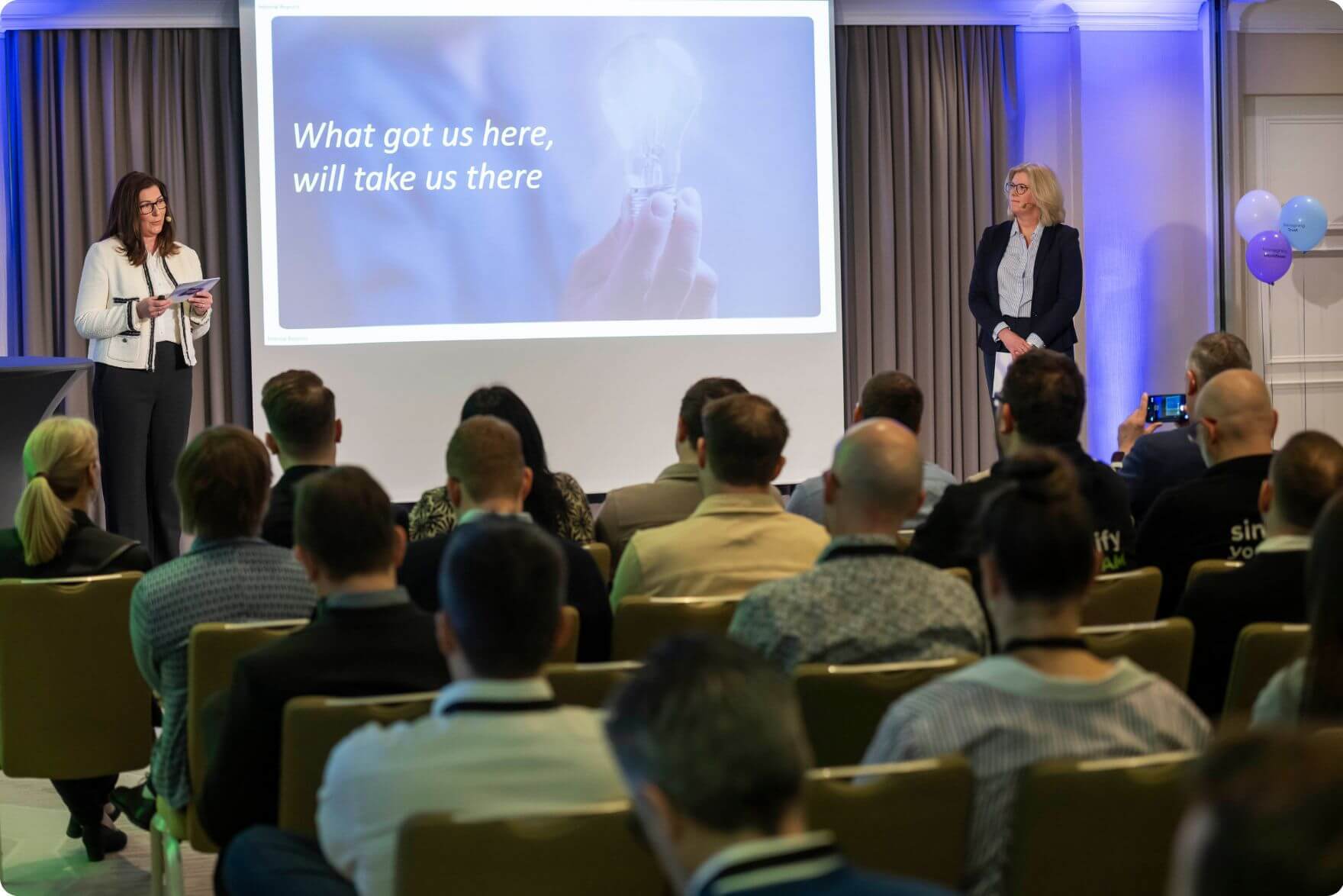
As Anne Gretland (CEO at Fotoware) and Janniche Moe (CPO at Fotoware) framed it, organizations are no longer looking for systems that simply store and retrieve assets. They need platforms that allow them to move, transform, govern, and distribute content seamlessly. In other words, DAM has become a Content Operations platform.
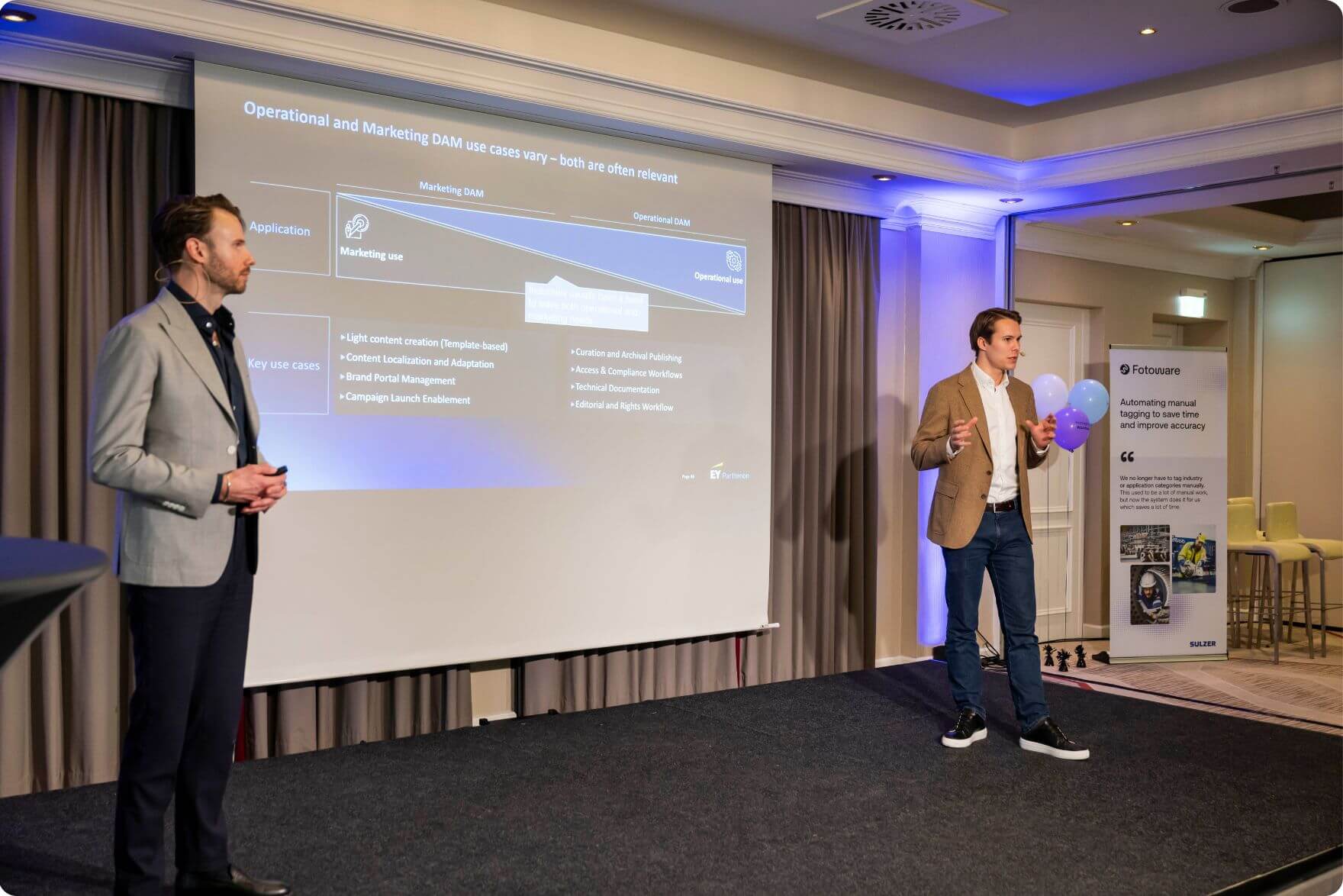
This perspective was reinforced by market insights from Jacob Blomgren (Director Technology Businesses at EY-Parthenon) and Aksel Skaar (Engagement Manager at EY-Parthenon), who pointed to increasing complexity across industries. Content volumes are growing, regulatory requirements are tightening, and AI is accelerating both creation and expectations.
In that environment, value no longer comes from isolated features but from how well DAM supports workflows, connects systems, and enables structured, data-driven operations.
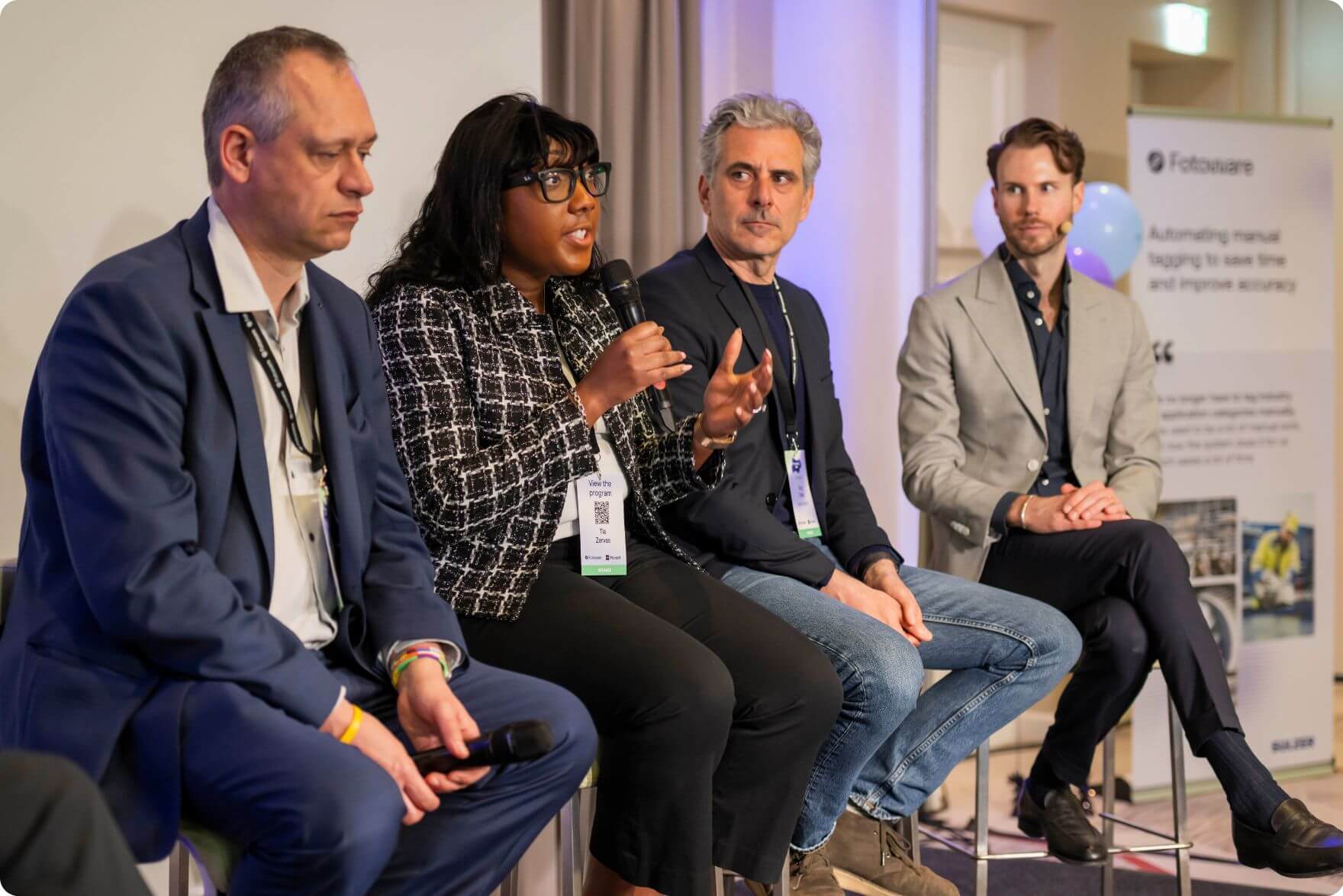
But this transition also exposes tension. The discussion in the Future of DAM panel, including Clemency Wright (DAM Consultant and keywording expert), Frédéric Sanuy (Owner of DAM News), Tia Zervas (Sr. Principal Analyst at Gartner), and Timo Faber (DAM Consultant at dampioneers), and Jacob Blomgren highlighted a gap between technological possibility and organizational readiness.
While capabilities are advancing rapidly, many organizations are still building the foundational structures such as metadata, taxonomy, and governance models, required to fully leverage these capabilities.
The future of DAM will therefore not only be defined by innovation, but by the ability to operationalize that innovation effectively.
Trust becomes the common denominator
Across all these discussions - workflows, platforms, market dynamics - one theme kept resurfacing: trust.
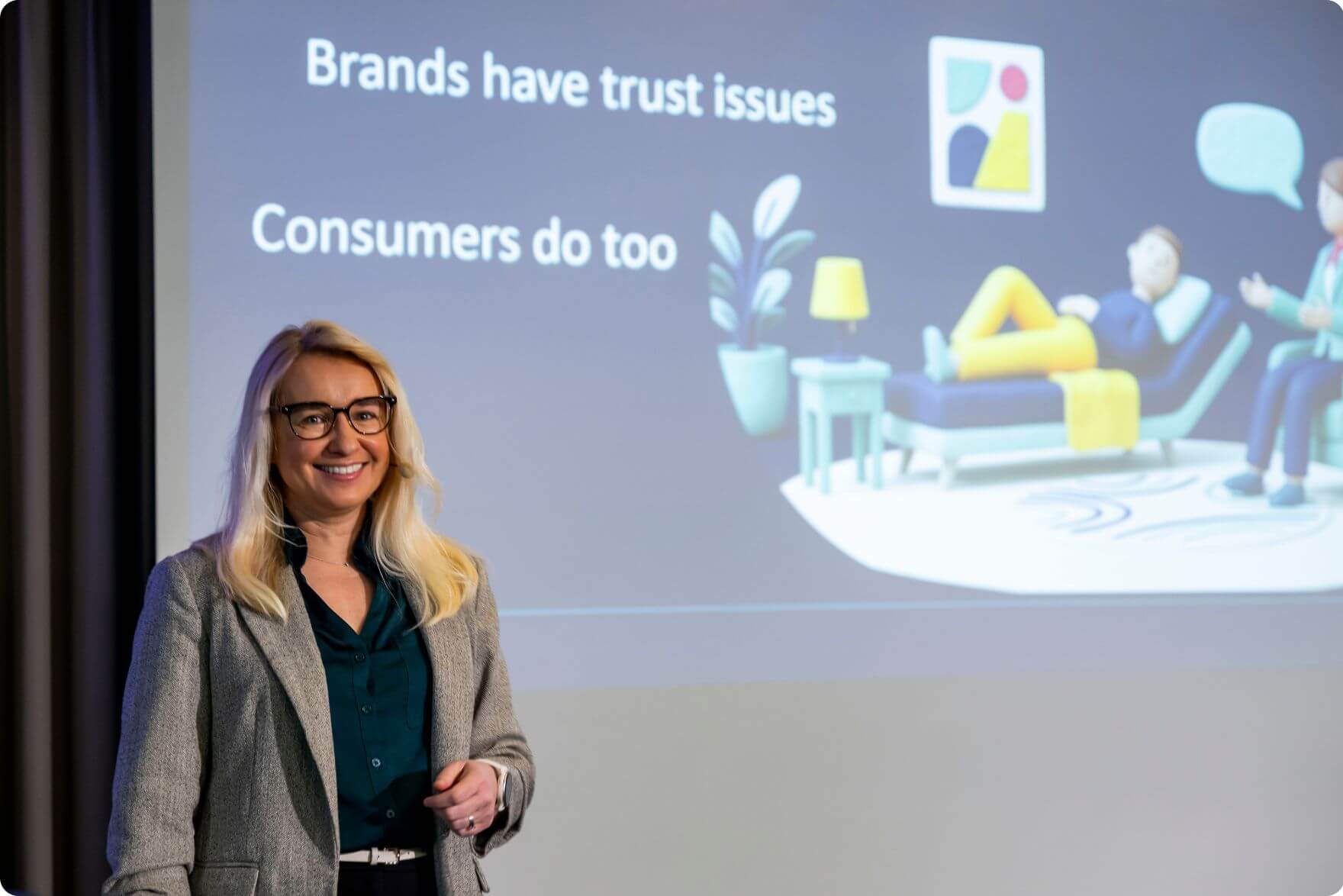
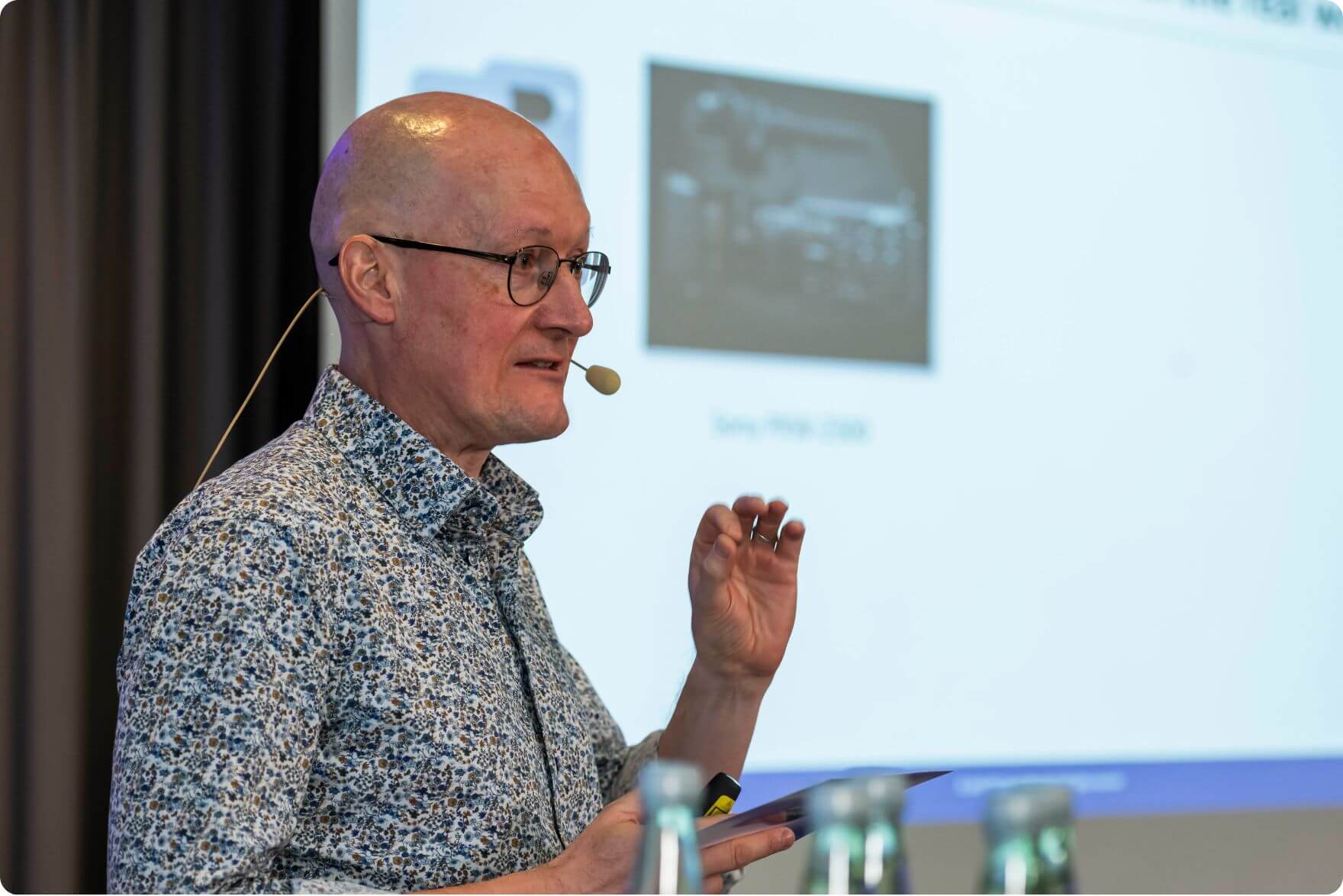
Kristina Huddart’s (DAM Consultant at Huddart Consulting) keynote helped articulate why. As AI accelerates content creation and complexity increases, the question is no longer just “Can we produce and distribute content?” but “Can we trust it?”
Kristina’s perspective reframed trust as something tangible and operational. It is not an abstract concept, but a set of capabilities embedded in systems and workflows: governance, rights management, provenance, access control, and accountability. When these elements are in place, organizations can scale content operations with confidence. When they are not, trust decreases.
This is exactly what we saw in practice. At Equinor, trust is operationalized through roles and training. In law enforcement, it is enforced through chain of custody. At the Munch Museum, it is ensured through a connected content ecosystem and data consistency.
Different contexts, same underlying requirement: content must be reliable, explainable, and controlled.
From trust to authenticity
Trust was a central theme and content authenticity is one of the most urgent challenges to be resolved.
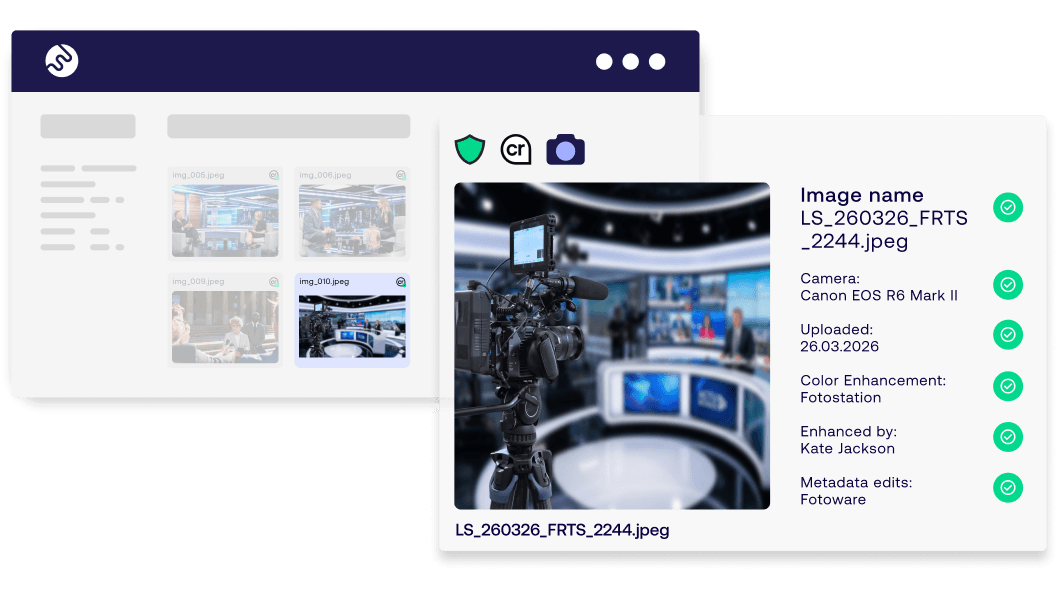
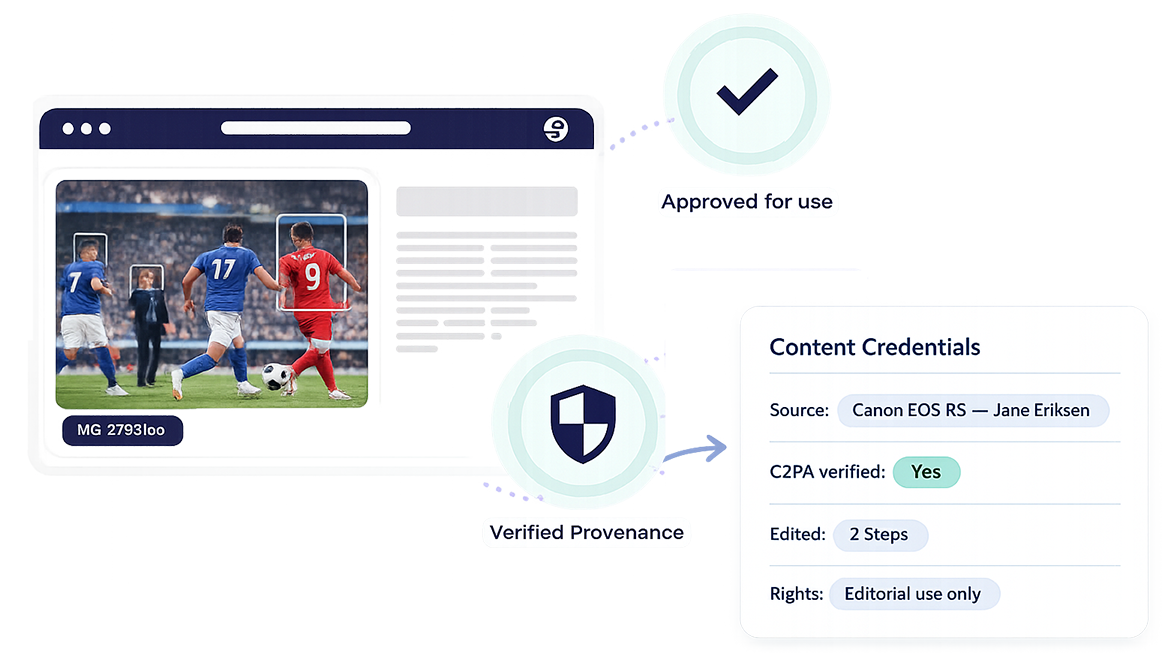
Brendan Quinn (Managing Director at IPTC) brought this into focus by exploring how standards like C2PA are enabling a new level of verification. As AI-generated content and misinformation increase, the ability to trace the origin and history of an asset is becoming critical.
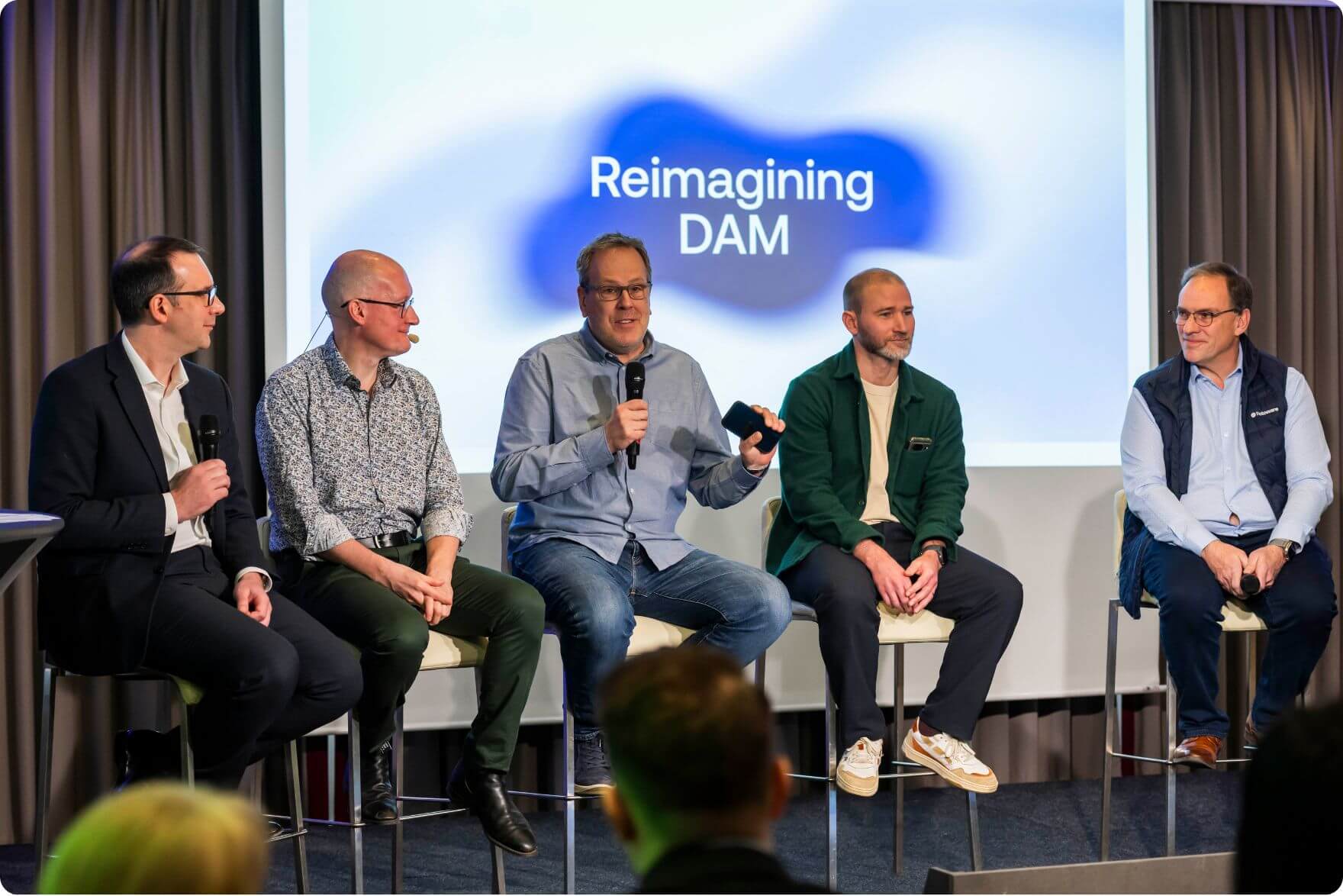
This shift from managing content to verifying it, was also central in our second panel discussion with Kevin Coombs (Pictures Production Editor at Reuters), Mathieu Desoubeaux (CEO & Co-Founder at Imatag), Richard Shepherd (Senior Product Marketing Manager at Canon Europe), and Stéphane Dayras (Professional Services Manager at Fotoware).
From cameras embedding credentials, to watermarking technologies, to DAM systems preserving and exposing provenance, the discussion highlighted a growing infrastructure of trust. Each layer contributes to a chain of custody that enables organizations (and ultimately end users) to verify what is real.
The panel underscored both the urgency and the opportunity. While the challenges are significant, the tools and standards required to address them are rapidly maturing.
AI accelerating value and risk
Artificial intelligence was present in nearly every conversation, but in a more nuanced way than in previous years.
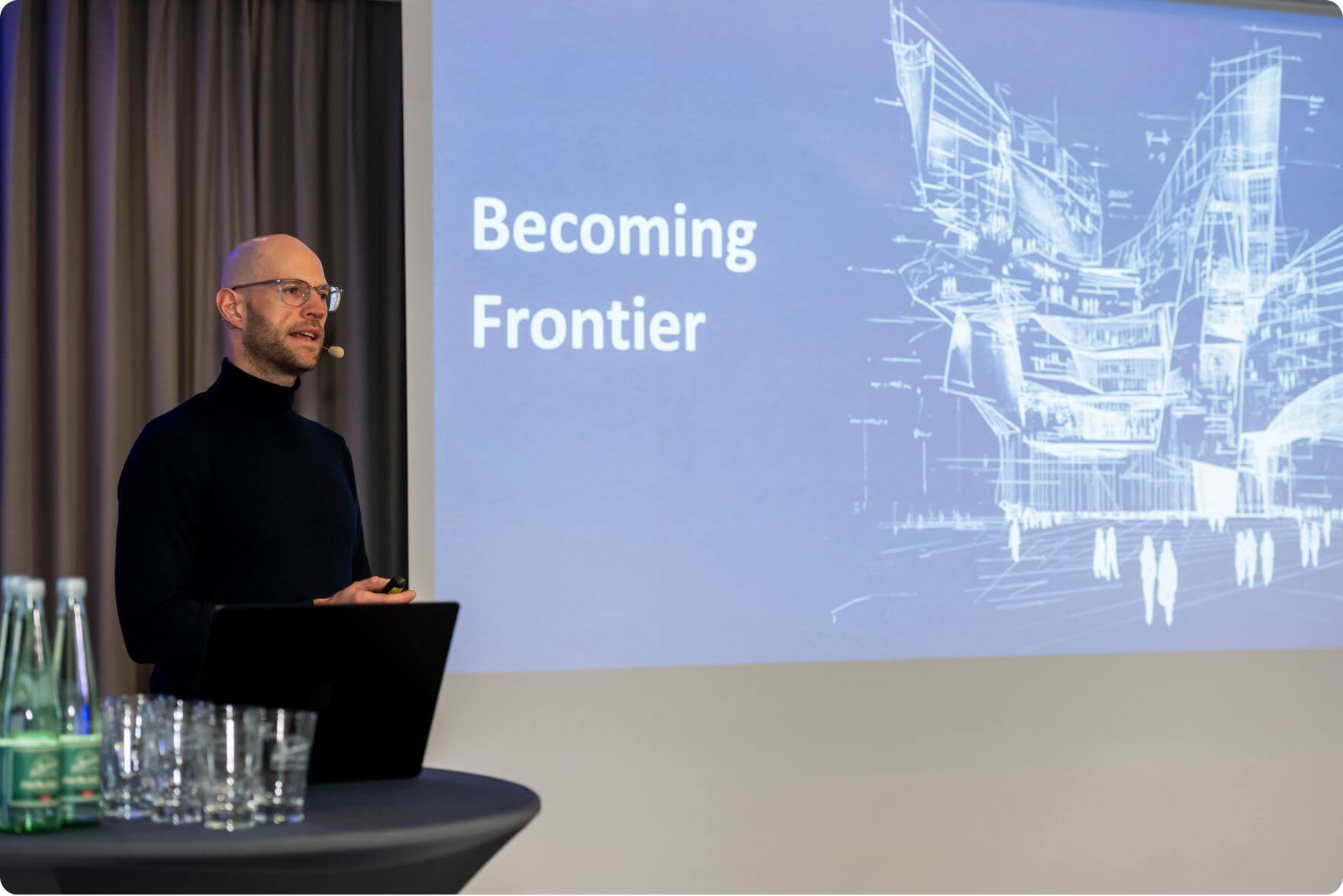
As Matthias Seil (Solution Sales Lead at Microsoft) emphasized, the focus is shifting from what AI can do to how it should be used. Questions of fairness, transparency, and accountability are becoming central.
For DAM, this creates both opportunity and risk: AI can dramatically improve workflows by enhancing metadata, enabling search, accelerating content production. But without structure and governance, it can just as easily undermine trust and control.
This is why the themes of AI and trust are so closely linked. AI increases the need for control, not the opposite.
Trust at scale: infrastructure with impact
The importance of trust becomes even clearer when looking at IT infrastructure. As organizations navigate an increasingly complex risk landscape, questions of security are becoming central to technology strategy.
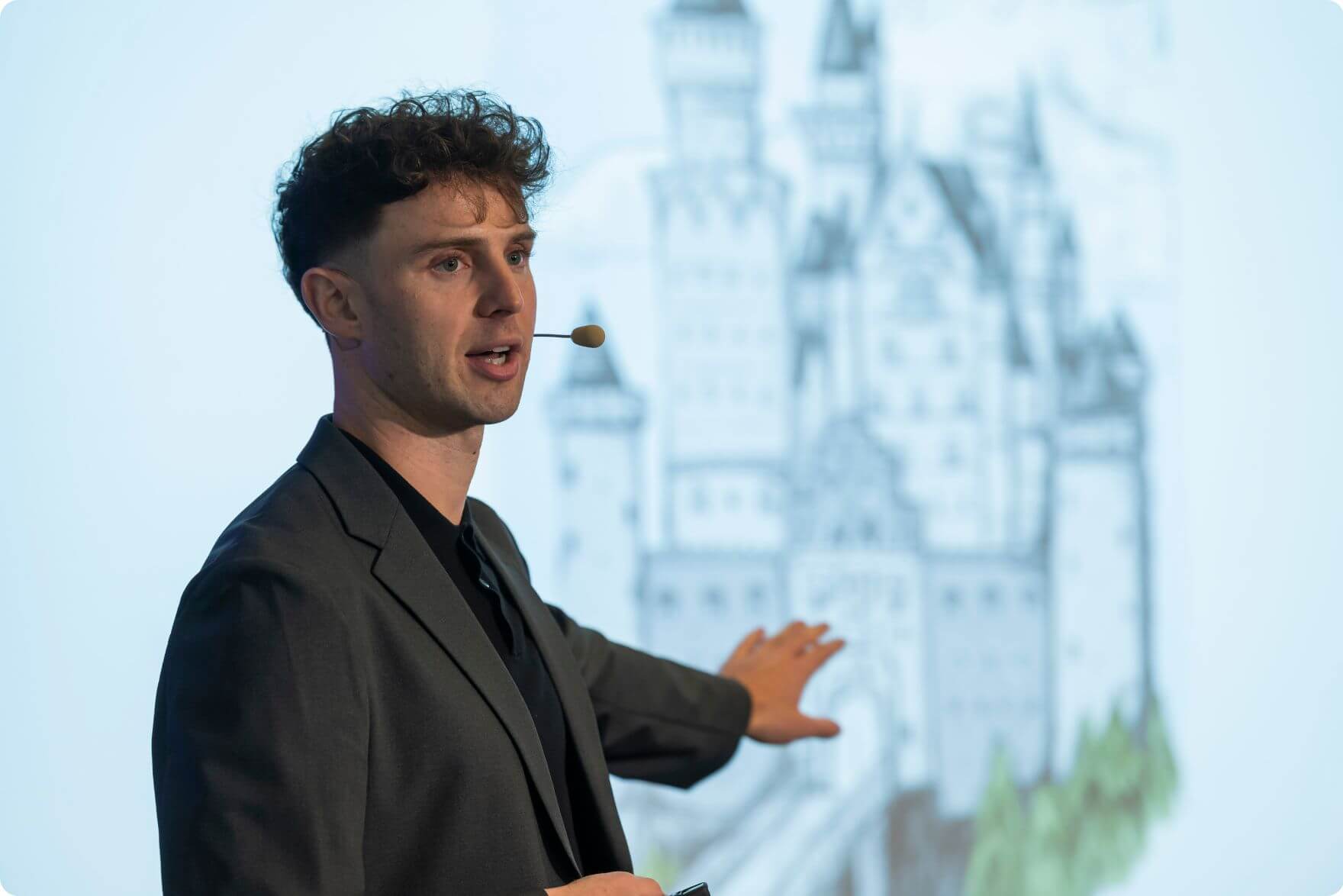
John Haist (Technical Security Specialist at Microsoft) highlighted in his keynote how Microsoft Azure cloud architecture has established zero-trust principles, where security, compliance, and sovereignty are built into the system by design.
Learn more about Security at Microsoft in this interview. >
For DAM, this reinforces its role as part of a broader ecosystem where security is not an add-on but a fundamental requirement. And the balance between speed and control is where modern DAM proves its value: content must move fast, but it must also remain secure and reliable.
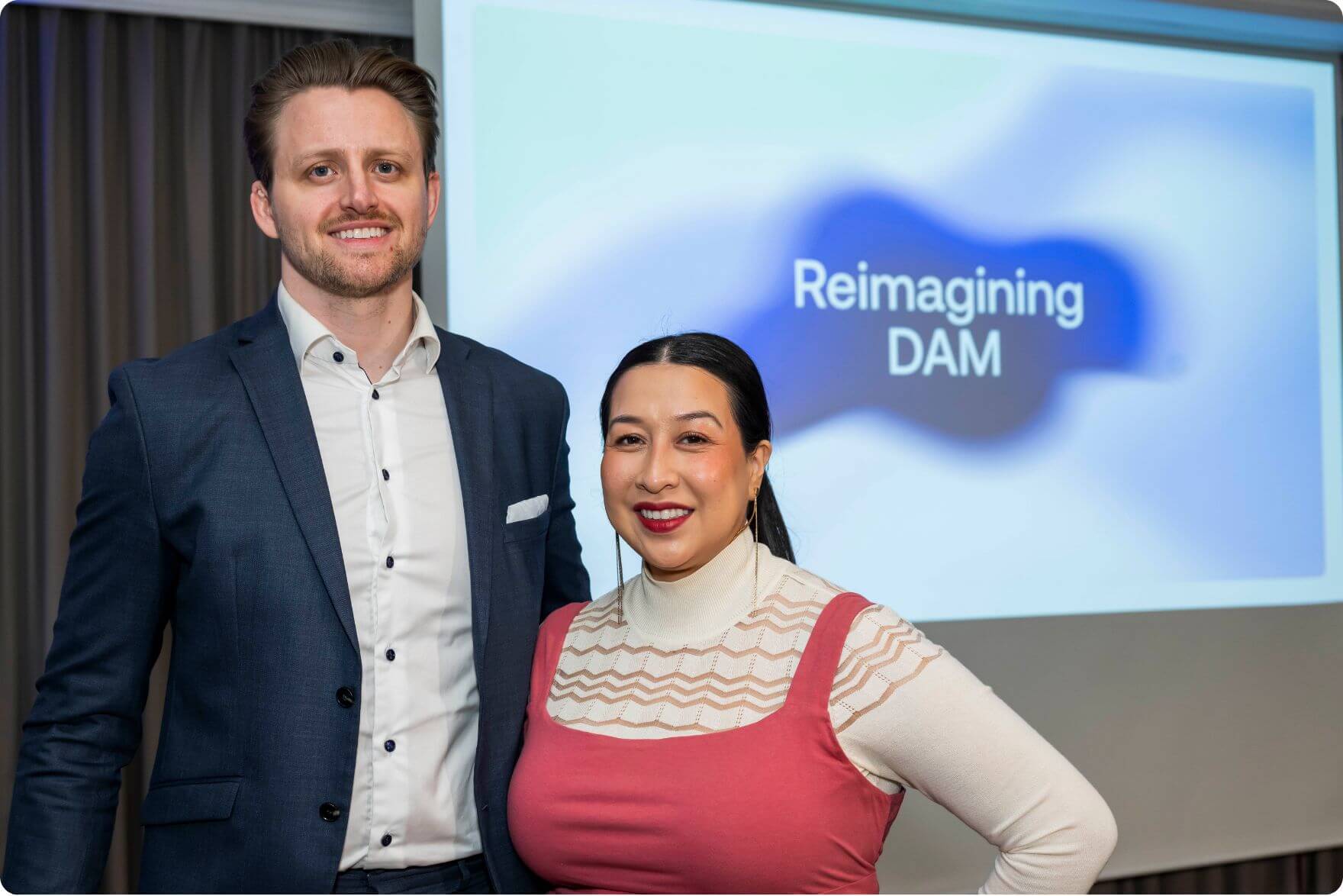
A defining moment for DAM
What made Reimagining DAM 2026 stand out was not just the range of topics, but how clearly they connected.
-
Workflows are becoming more complex, yet more critical to an organization’s success.
-
AI is accelerating content creation and processes, but also poses risk.
-
Need for governance and regulatory requirements are increasing, and human-centric frameworks are becoming more relevant than ever.
And across all of it, one need ties everything together: Trust.
The industry is moving beyond managing files toward managing trust, content flow, and results. DAM is now central for how organizations operate, connect systems, enforce governance, enable AI, and ensure that content can be trusted in an increasingly complex digital world.
For Fotoware, with more than three decades of experience and a foundation built on trust, this moment represents both validation and opportunity.
The transformation of DAM is no longer on the horizon. It is already underway.
Read more: Celebrating Excellence - Reimagining DAM 2026 Awards
Thank you to everybody who has helped making Reimagining DAM 2026 a success. We appreciate all the contributions that have been made to the agenda, the organization, by sharing knowledge and inspiration, and creating such a buzzing atmosphere!
On this page