Digital Asset Management helps Norway's National Museum Transform
The National Museum of Art, Architecture, and Design in Oslo has revolutionized its operations by digitizing over a million files and utilizing AI for metadata management. This article highlights the museum's innovative efforts to streamline workflows and enhance access to its vast collection.
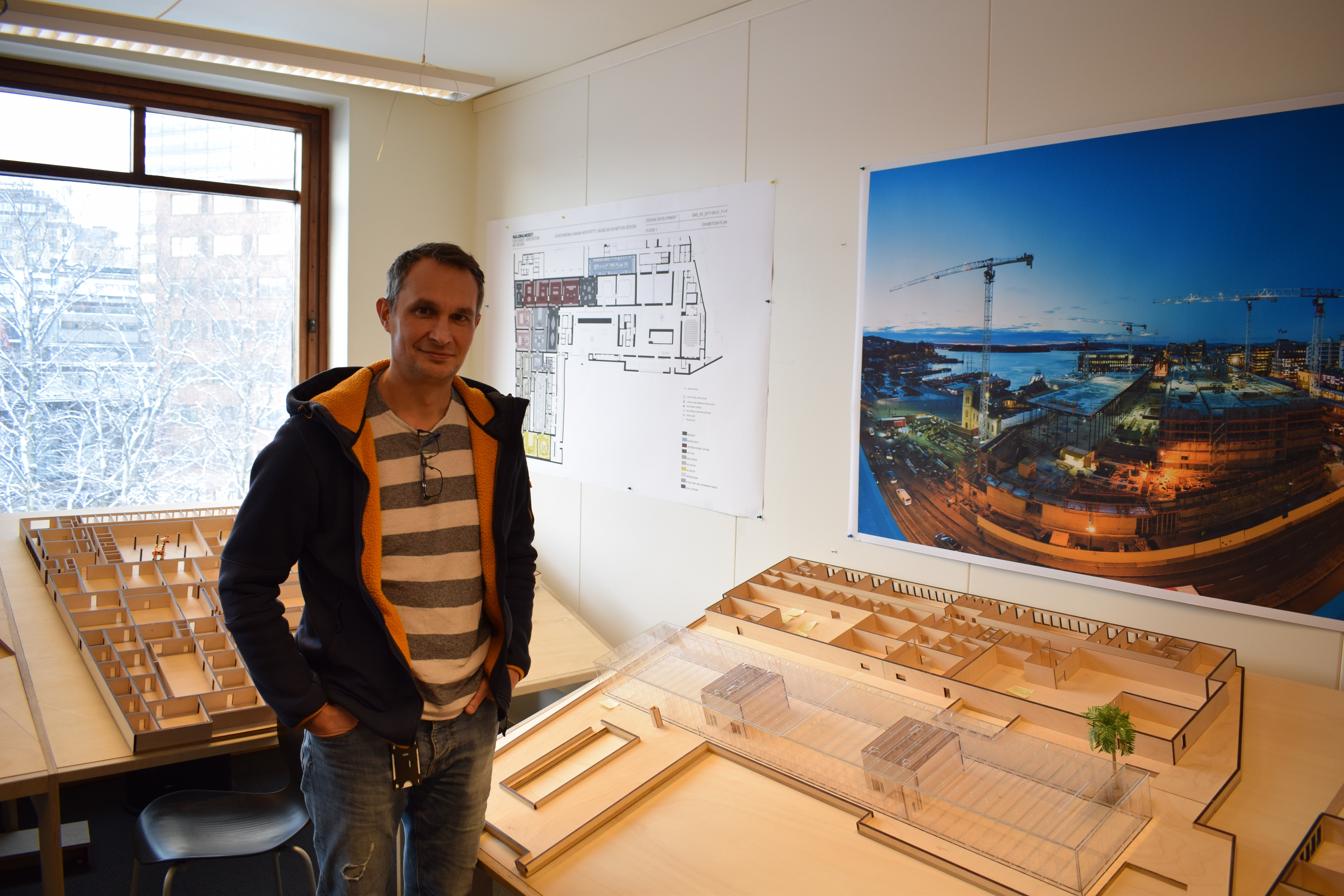
Fotoware visited the National Museum of Art, Architecture, and Design in Oslo and spoke with Photo Archivist, Vidar Ibenfeldt.
Vidar Ibenfeldt is responsible for administering the archiving system and he and the team at the National Museum have done great work on digitizing archives from the old museum.
They have also launched several smart and interactive AI-driven projects with the goal to ‘raise knowledge about and commitment to visual arts, architecture, crafts and design, develop the critical sense, stimulate new recognition, create increased historical awareness and tolerance for diversity.’
This would not have been possible without the help of their great digital archive which contains over 1,000,000 files, including images from every angle of objects to create 3D photogrammetry.
'I think we have just under 100,000 high quality object pictures like artworks, events, and openings and so on. We take 50-100 pictures of every event and we have events every week!'
Credit: Nasjonalmuseet / Annar Bjørgli
The Problem the National Museum was facing
‘All of our assets were on different hard disks on PCs everywhere. There was no single source of files. Everybody just had their pieces of the collection on their computer. The photo department needed a tool to get an overview of all the assets, so we decided on a Digital Asset Management system.’‘Before that, the photographers did almost twice as much work after the pictures were taken. Not only did they have to do the after-effects - work like contrast, color balance and all that - but they also needed lots of time to enter the metadata manually. So that has been a time-saver!’
Credit: National Museum / Frode Larsen
Workflows as part of a Digital Transformation
The museum houses a vast collection of media utilized by various departments throughout the organization.
With so much content to handle, efficient workflows are essential to ensure that the least amount of time is spent on tasks that detract from the job at hand.
Vidar explains how these daily processes are carried out at the National Museum:
'It starts with a customer or one of our colleagues in a different department, and we can get from 5 to 20 requests each day.
For example, the communications department is responsible for making the webpage, and newsletters and running our social media.
If they want to publish something, they will need a picture and will make a request through the system. When I receive the request, I check whether we have the assets in our system and send it to them directly, or I link to an album in the system from which they can view and download the assets.'
‘We also have external customers who can request images from our image agency. It’s a webpage with some information about copyright and prices, and a simple form to type in who they are, what they want and what they want to use it for.’
How can machine learning help institutions like Museums and Art Galleries?
‘It's a big job entering all the metadata from our database. I have access to our search log from the digital asset management system and I can see all the words entered as a search word. This means I can see many words that people use to search which haven’t struck me as being a keyword before - people search for everything that falls into their mind!’
Vidar explains how artificial intelligence could be used to aid the process of metadata input, with the example of preparing for festive campaigns.
‘On Halloween, for example, I see people search for ‘scary’ paintings, but we don’t have that word in our metadata. But, perhaps if the image is realistic enough, then maybe artificial intelligence can determine something as being scary or beautiful, or whether it has a lake or a forest or a boat in it.’
The same can be said for Christmas, where artworks may again be used for campaigns: ‘It could be described as 'beautiful', 'snowy', 'winter' or keywords like that. If I could get that metadata automatically, it would be a great asset for those who search for these things, because we don’t have the time to enter this type of metadata. We could never manually type in all the words people search for’.
http://repcol.bengler.no/
Transforming Photos and Assets by Leveraging Data
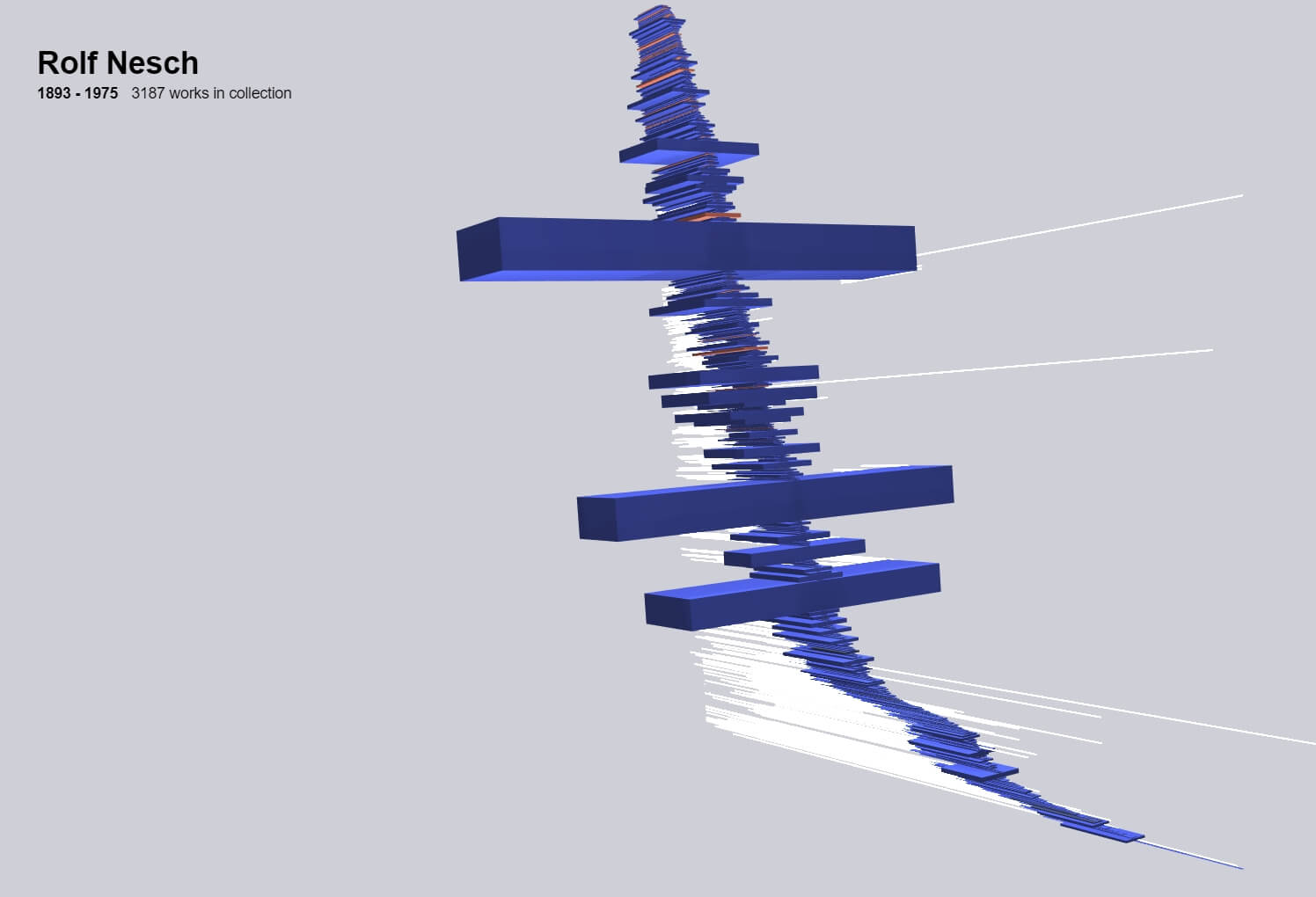
The National Museum built a 3D digital sculpture of their files by leveraging the metadata stored in those files. The project was made with the support of the Arts Council of Norway and created with Bengler AS.
The model is made up of tiles representing the individual artists and is structured by the amount of an artist's work held at the museum.
‘If we have a lot of an artist’s work then the tile is big and if we have only a few pieces then the tile is small. In the end, we got this 3D digital sculpture of the collection, which you can turn around to look at from every angle. You can click on the tiles and get the information about the artist and all the artwork in their section, all the male artists are displayed as blue tiles, while the female artists are red tiles. The result showed that the sculpture was almost completely blue!’
The power of data can help us bring awareness of how underrepresented female artists are, and provoke valuable discussion, bringing about actions to address such imbalances.
Want to learn more?
Talk to one of our experts to discover how we can streamline your organization's content workflows.
On this page