<img src="https://ad.doubleclick.net/ddm/activity/src=10024890;type=invmedia;cat=front0;dc_lat=;dc_rdid=;tag_for_child_directed_treatment=;tfua=;npa=;ord=1?" width="1" height="1" alt=""> Chi Modu on photographing hip hop’s rise | Fotostation creator spotlight
Skip to content

All images: Chi Modu

Media & Entertainment

Chi Modu: The photographer who captured hip hop’s soul
3. November 2016

Before hip hop was mainstream, Chi Modu (1966-2021) was documenting its rise from behind the lens - capturing now-legendary artists like Tupac Shakur, Biggie Smalls, and Snoop Dogg. His work helped shape hip hop's visual identity and remain iconic to this day.
This interview was originally published by Fotoware following the release of his book Tupac Shakur: Uncategorized in 2016. Chi Modu was a Fotostation user for over a decade, and we’re proud to have supported him in managing and licensing his extraordinary archive. We republish this conversation to honor his legacy and lasting impact on visual culture.


Chi Modu released Tupac Shakur Uncategorized in September 2016, a book featuring 200 pages of previously unseen photos of the rapper - 20 years after his death.

Chi talks about how he began shooting with hip hop’s biggest stars and why an empty billboard inspired one of the most important turning points of his career.

From Nigeria to New York: How Chi Modu discovered photography

- I was born in Nigeria, but raised in New Jersey. There was a civil war in Nigeria, the Biafran War, and my Dad was working on his PhD, at the University of Chicago, in America at the time so the whole family moved here to join my Dad. I moved here when I was three, went to high school here, went to college in New Jersey at Rutgers and then after college I moved up closer to New York City, where I started working small jobs and got in to the International Center of Photography (ICP).

Photography was always a passion of mine, and when I was in college, my girlfriend at the time and I put the money together to buy my first camera in 1987 – and she’s now my wife today, so she saw the whole ride!


Bringing photojournalism craft to a growing culture

Post-college, I knew that I really wanted to do this and that’s where my education at The International Center of Photography came into play. It was a photojournalism training ground, a very traditional photo world and they’d train you for New York Times, Time Magazine – photojournalism stuff.

At the time, I saw hip hop coming up, and thought if I can take these skills and apply them to this burgeoning art form, it’s gonna make a difference. I brought a high level of photo skills into an arena that had been traditionally photographed more ‘Teen Magazine’, Fanzine style, and I brought 4×5 portraiture into it in 1993. That really jumped up the whole space a lot.

I think in retrospect, when people look at my career, they understand that that’s why I became so well-known because I was so technical and serious back then, even when people didn’t really know what I was doing. But now 20 years later, they realize how important it was, but that’s the nature of the medium.

chi-modu-2

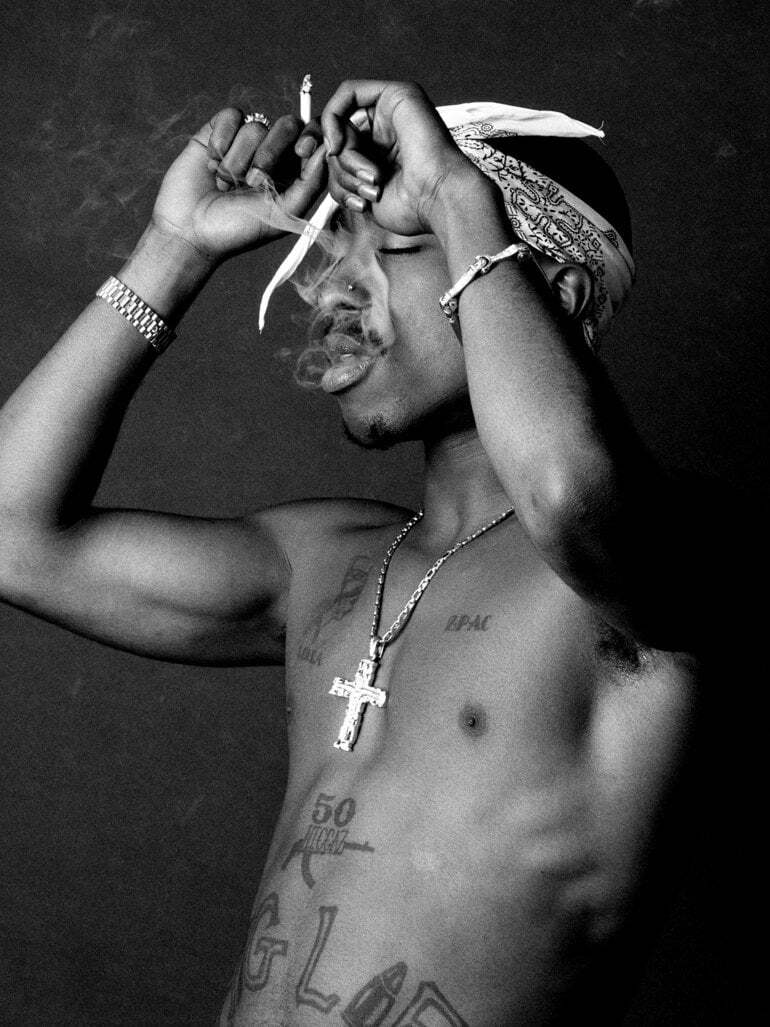
Tupac Shakur photographed by Chi Modu

A camera, a beeper, and a break into hip hop

Back in 1990 there weren’t cell phones, we had beepers at that point. So when I first grabbed a camera there were some free newspapers in New York City, one was called The Amsterdam News. They would offer me $15 if a photo that I took ran in the paper. You’d have to come up with all the costs yourself, all the film, everything… so I didn’t make any money!

But at The Amsterdam News I met a few people that knew about The Source magazine which was just coming up. I went down to talk to the people at The Source and said “I know how to take pictures and I have a beeper”, so they said they’d call me when they needed me for stuff.

Eventually I started to show up all the time for events and things, then the artists started seeing me and knew that if they posed for my camera the image would show up in the magazine.

I started to become the eyes for Hip Hop and this was at a time where there wasn’t a whole lot of competition because it was the early 90’s – not a lot of people could afford film, or even knew how to use it, but I had a decent camera, a Nikon, and I could actually get in the mix.

Once the artists saw me as that guy, my reputation went up in their minds and then that’s how my archive started to build.

I also started to add value to The Source because they had a photographer which was as much a part of the brand as the name “The Source” was.

Why artists trusted him: More than just a photographer

In some ways I was like the final word on these artists thinking “I’ve arrived”, because once I’m photographing you, that means you’ve arrived, you’re now at this level where the magazine’s writing about you and people want to know about you.

People were always happy to see me, they weren’t like “what are you doing here?!”, so my job was pretty cool in that I was bringing gifts wherever I showed up. It’s not like a writer, where the article may be positive or may be negative depending on their mood or whether they like the music, but I wasn’t judging the music and my relationship with the artist was more like a partnership. It was like we were on the same team. I was trying to make the artist look good so I look good. My job was to make them look good. The music matters, but I’m there for how you look, not how you sound.
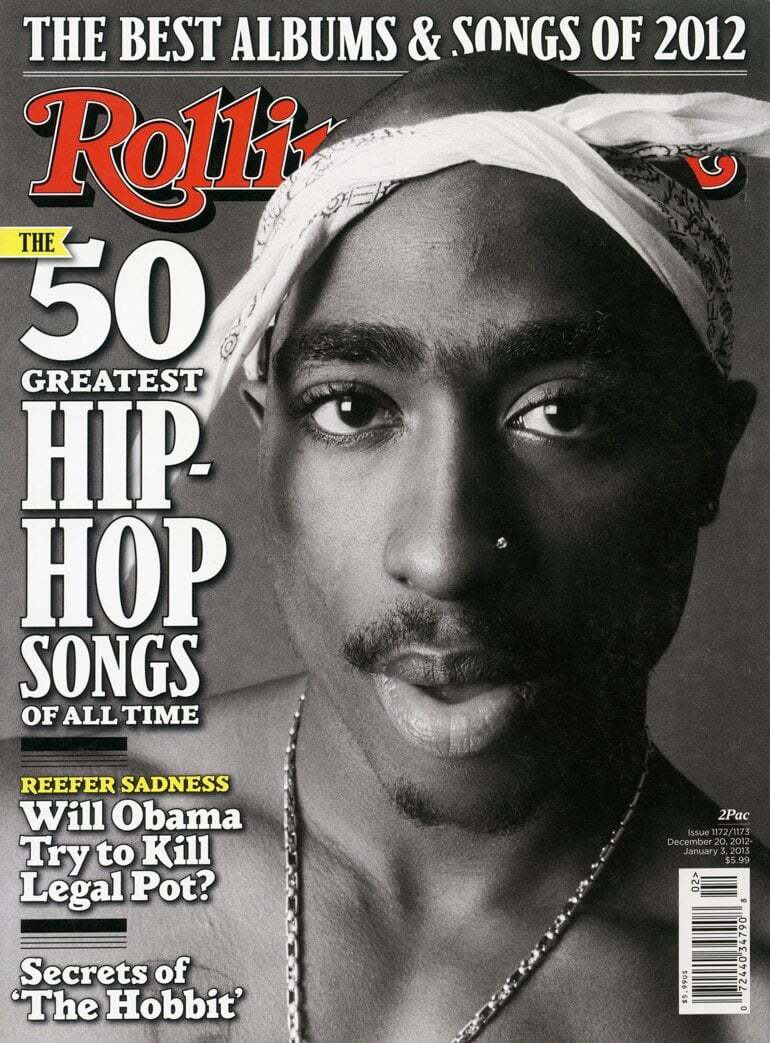
chi-modu-3-tupac

Tupac Shakur on the cover of Rolling Stones Magaze in in 2012. Photo: Chi Modu. 


Capturing legends before they were icons

In 1992, even though they were happy to see me, it was still a dog eat dog environment, so I had to have my own presence to get these very popular superstars to cooperate. You’re talking to people who are very young and have a lot of power, so my most important skill as a photographer was that I was able to make people comfortable. You can’t be scared to make people comfortable, you have to bring comfort.

Once I made the artists comfortable, then they’d relax and then I was able to get the more honest pictures, which are the ones that live forever.

My approach is always to get people to relax, I’m a very down to earth dude, very approachable and it’s not because I don’t know who I am or what I’ve done, but because of that I’m able to be approachable – some people go the other route, they know what they’ve done and become unapproachable.

People like me and once they like me we can work together to make some magic! When they see the results later they’ll want to work even harder the next time they see me. I think part of why many of the major artists including; Premier, Snoop, Drake, all follow me on Instagram is because there’s a certain amount of respect that people have for the work that I’ve put in. I was really very serious with the camera in that I knew the work that I was doing would ultimately be very important for a generation.

Legacy, patience, and the long game of photography

I knew that my money from my music photography was going to come years later, not then, and a lot of people don’t know that level of sacrifice. That’s the challenge this generation has, as people want everything right now, but photography really needs 20 years.

For me now, part of this resurgence is that we’re at this 20-year marker and people are looking like “who is the person that did all this?” and seeing that it’s me.

If you talk to any artist, I don’t think it’s really all that unique, I think we all go through this process - and as painful as it is, you kind of have to make it through the process to really be great. So I’m fortunate in that I’m on the other side of that process now and it’s nice to get there – it’s not done but it’s a process.
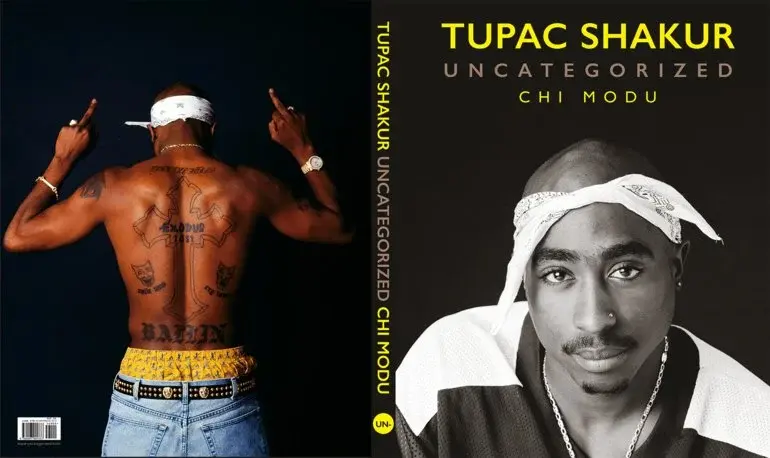
chi-modu-4

The cover of Chi Modu's "Tupak Shakur: Uncategorized", a 200 page photo book published in 2016, containing images and portraits of the artist taken from 1994-1995 by Chi Modu.
Turning the streets into galleries: The birth of ‘Uncategorized’

- Initially I stopped photographing music hard-core in the late 90’s, so what I did for almost a full decade after that was to license my photography. For a long time, I was licensing stock imagery of my music photography and I would also photograph other subjects outside of the music space.

But about 3 or 4 years ago, I thought to myself that if I don’t do something, people will actually forget who did some of this important work. And I was starting to hear a lot of other names being raised as to who was “the guy.” So I thought “you know what? I can fix that”.

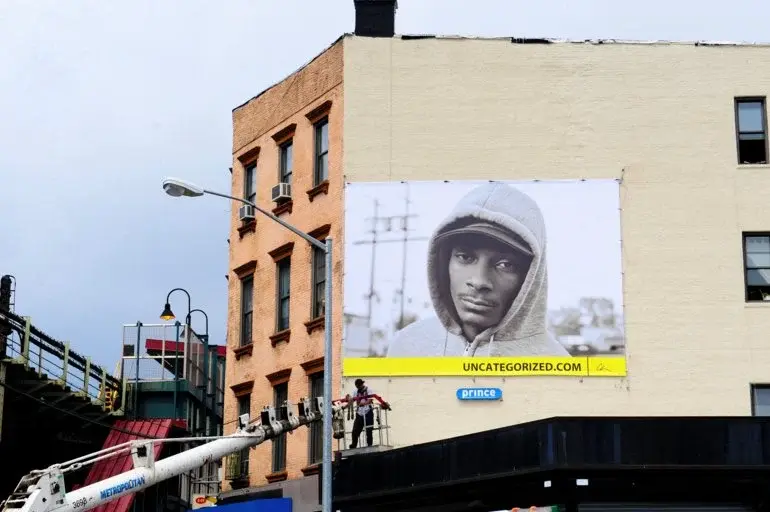
So I had these pictures and I was walking by a vacant billboard in Soho in New York City, and I looked at it and knew that I’d always wanted to wrap buildings in my imagery, but figured a billboard is the next best thing. The thinking was that a billboard allows you to take the art to the people and that’s always been my push.

The goal was to find a way to go around the middlemen that are stopping the people from seeing my work – and the middlemen are the museum galleries, the curators, the magazine editors, and the rest of the people who decide what the public sees.

So I decided to go to the public directly via the billboards. At first we took out 5 and then eventually a total of 7 billboards around New York City, starting in the Summer of 2013.

The first round was up for around a month and a half or so and that project got a lot of attention.

It was like no-one had seen anything like that before. I would place a photograph of mine, the word ‘Uncategorized’ at the bottom and then my signature in the corner, and I wasn’t selling anything, just selling myself – but not for photo work, I was selling myself for history and taking my position.

chi-modu-5

A portrait of a young Snoop Dogg featured in Chi Modu’s groundbreaking "Uncategorized" billboard exhibition - bringing hip hop photography out of galleries and onto the streets of New York in the summer of 2013.
When people found out about it, they thought it was incredible and then a museum in Finland asked if they could do a show of my work because a friend of mine brought it to their attention.

So in August they said they wanted to do a show for the following summer, which was very soon in the museum world, and they ended up making it their major show in the summer season.

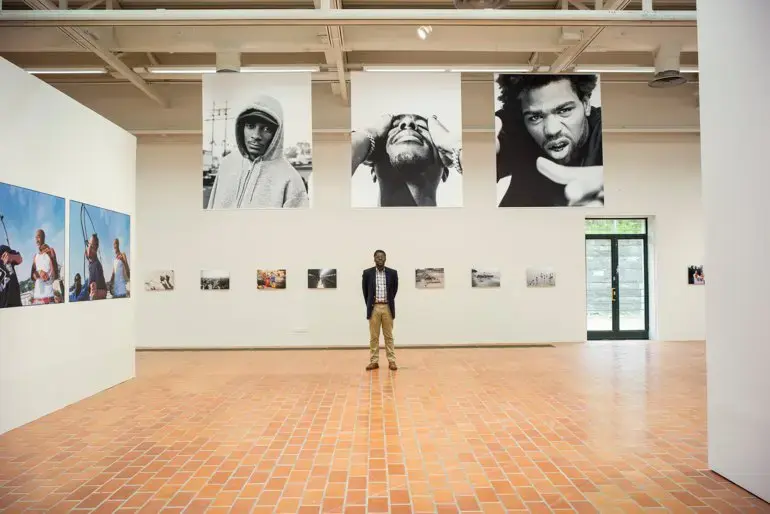
It had an 800 square metre space and it was a solo show, so that was a big deal and kind of put me on the international map with Uncategorized.

I returned the following year to release a book with the Pori Art Museum, as a catalogue to the show.

After that, I knew that I was going to start to do my books and I knew the 20th anniversary of Tupac’s death was coming up, so I stuck with the Uncategorized theme and recently released Tupac Shakur: Uncategorized.

In Part II of our interview, he talks about the business behind his passion, the impact of social media on photographers and adapting to tech advances in the industry. 

To find out more about Chi's work:

http://uncategorized.com/ 

https://www.instagram.com/chimodu/ 

https://www.instagram.com/mrleicam/